In this article
- Why take a Romanesque church route in Andorra
- Essential Romanesque churches in Andorra
- Sant Joan de Caselles (Canillo)
- Santa Coloma and Espai Columba (Andorra la Vella)
- Sant Climent de Pal (La Massana)
- Sant Miquel d'Engolasters (Escaldes-Engordany)
- Sant Martí de la Cortinada (Ordino)
- Quick comparison for your route
- How to organize your cultural route by profiles and seasons
- Local tips and common mistakes
- Where to sleep during your Romanesque route
- Frequently asked questions
If you're wondering what to do to discover the true essence of the Principality, visiting the Romanesque churches in Andorra is a must-do. In these first lines, I confirm it: there's no better way to understand the history, art, and life in the Pyrenees than through this cultural route. As a resident and passionate advocate for our heritage, I will guide you through stone hermitages, Lombard bell towers, and centuries-old frescoes that have withstood the test of time, surrounded by an unparalleled natural environment.
In this guide, you'll find everything you need to organize your route: what the essential stops are, local tips for visiting them according to the season, and where to stay to optimize your time. Get ready for a fascinating journey into the heart of medieval Andorra.
Why take a Romanesque church route in Andorra
Andorran Romanesque is unique. Far from the grand European cathedrals, here the style adapted to the harshness of the mountains. Its constructions are small, intimate, and perfectly integrated into the landscape. Built between the 11th and 12th centuries, they served not only as places of worship but also as spiritual and social gathering points for the valley inhabitants.
Exploring Romanesque art is one of the best destinations you can choose if you're looking for a deep cultural experience. The churches stand out for their square-plan bell towers (with twin windows), their slate stone walls, and, in many cases, surprising mural paintings inside.
Essential Romanesque churches in Andorra
If you're going to plan your itinerary, these are the architectural gems you can't miss on your route:
Sant Joan de Caselles (Canillo)
At the exit of Canillo, heading towards France, stands this 11th-12th century marvel. It is the perfect archetype of Andorran Romanesque: a rectangular nave, wooden roof, a semicircular apse, and a majestic Lombard-style bell tower.
- The expert detail: Inside, it houses a 12th-century stucco Christ in Majesty and a spectacular Renaissance altarpiece.
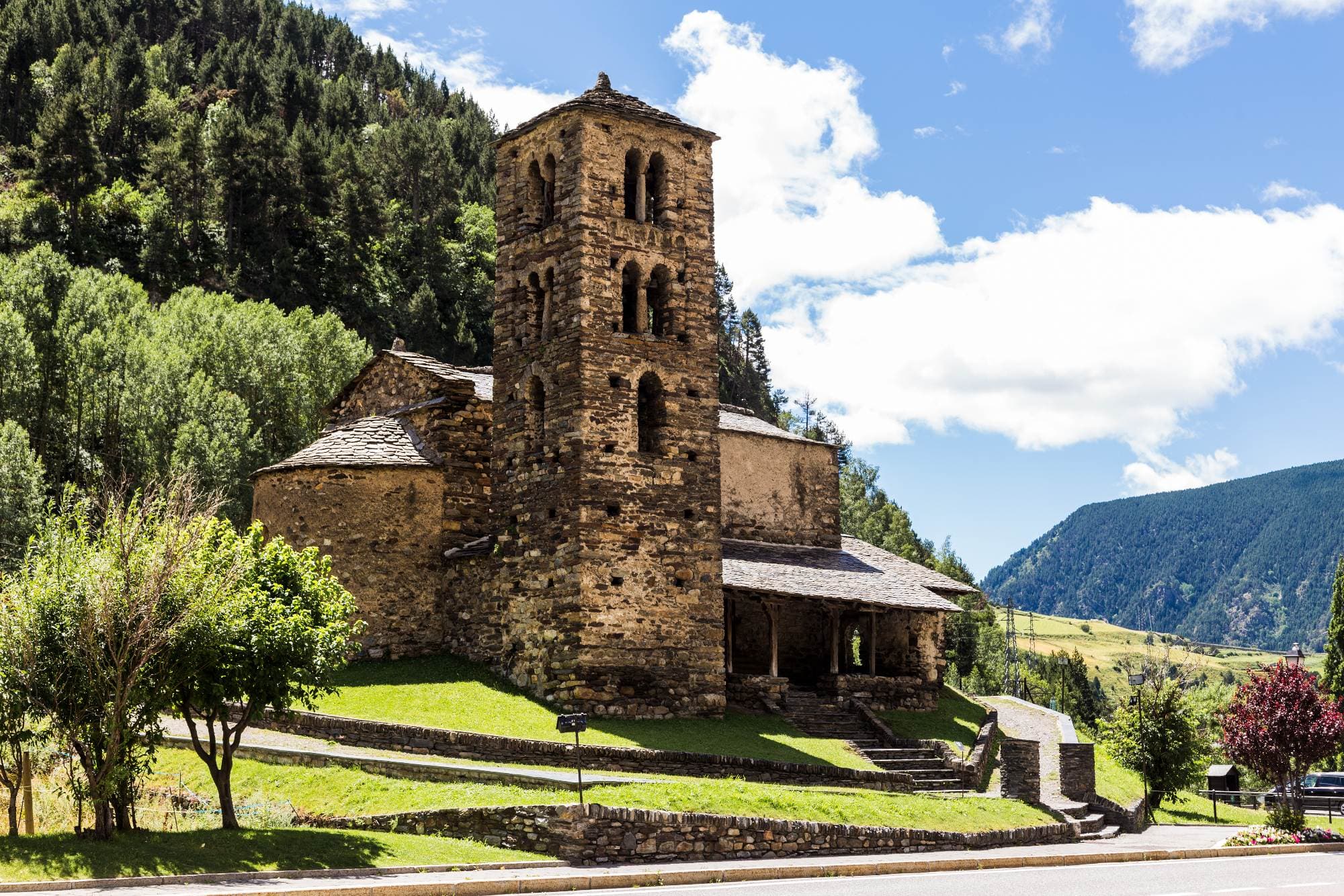
Image courtesy of Grandvalira Resorts and Andorra Turisme
Santa Coloma and Espai Columba (Andorra la Vella)
One of the oldest and most unique churches in the Principality, with pre-Romanesque origins. What makes it unmistakable is its 18-meter-high circular bell tower, the only one of its kind in Andorra.
- The expert detail: After visiting the church, you must go through the adjacent Espai Columba. Here, the original 12th-century frescoes are preserved, and inside the church itself, you can enjoy a video mapping that projects how the paintings originally looked in the apse.
Sant Climent de Pal (La Massana)
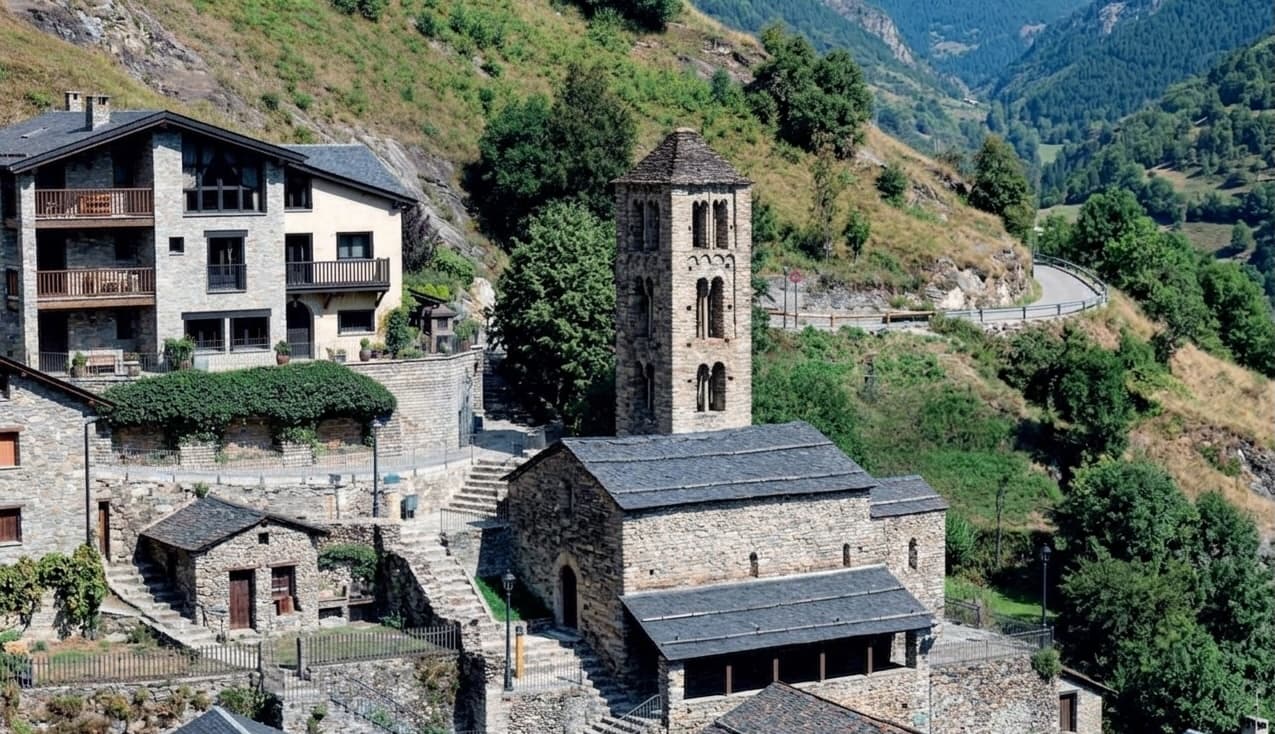
Located in one of the best-preserved villages in the country, this church stands out for its three-story bell tower with twin windows, one of the masterpieces of Lombard Romanesque in the region.
- The expert detail: Its integration with the old town of Pal makes it one of the most photogenic stops. Ideal for combining with nearby mountain activities.
Sant Miquel d'Engolasters (Escaldes-Engordany)
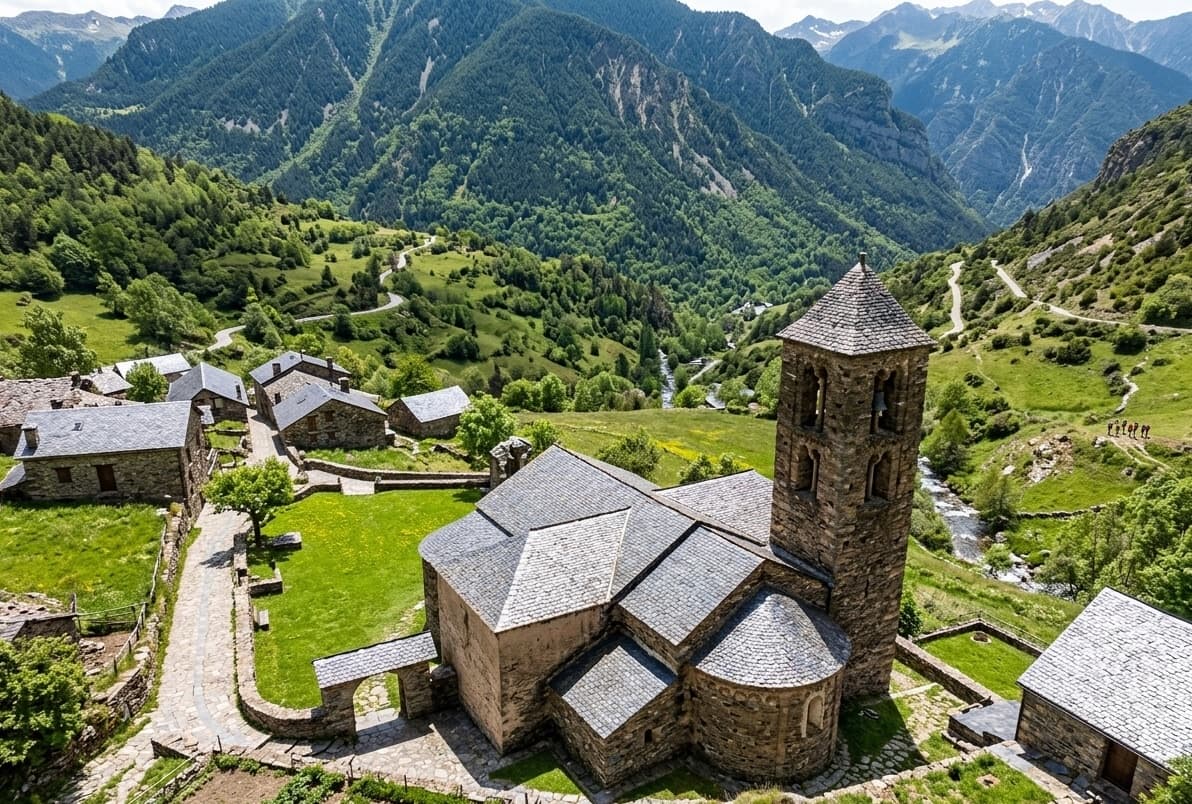
Situated on a natural viewpoint overlooking the valley, this small 12th-century church has a disproportionately tall bell tower (17 meters) compared to the size of its nave.
- The expert detail: Inside, you can see an exact reproduction of the mural paintings by the Master of Santa Coloma (the originals are in the MNAC in Barcelona).
Sant Martí de la Cortinada (Ordino)
This church is an excellent example of how architecture has evolved. Of Romanesque origin (12th century), it underwent significant expansions in the 17th and 18th centuries.
- The expert detail: It preserves Romanesque mural paintings, but also stands out for its Baroque altarpieces and the extraordinary wrought ironwork of its grilles, characteristic of the Andorran metallurgical tradition.
Quick comparison for your route
Church | Parish | Main Feature | Period |
|---|---|---|---|
Sant Joan de Caselles | Canillo | Stucco Christ and Lombard bell tower | 11th-12th C. |
Santa Coloma | Andorra la Vella | Circular bell tower and video mapping | Pre-Romanesque/12th C. |
Sant Climent de Pal | La Massana | Historic complex of Pal village | 11th-12th C. |
S. Miquel d'Engolasters | Escaldes-Engordany | Panoramic location and frescoes | 12th C. |
S. Martí de la Cortinada | Ordino | Architectural evolution and wrought iron | 12th-18th C. |
How to organize your cultural route by profiles and seasons
Grouping your visit depending on who you travel with and the time of year is essential when looking for what to do in Andorra.
- In Spring and Summer: It's the ideal season. Most churches open their doors to the public with extended hours and even offer guided tours promoted by Andorra Tourism. The weather allows for exploring nearby trails.
- In Autumn: The forests of Ordino and La Massana turn ochre and red. Visiting churches like Sant Climent de Pal or Sant Martí de la Cortinada becomes an unparalleled visual spectacle for photography.
- In Winter: Snow provides a magical blanket, turning the hermitages into Christmas postcards. Activities in Andorra with children during this time can include short routes to easily accessible churches (like Santa Coloma) combined with snow games.
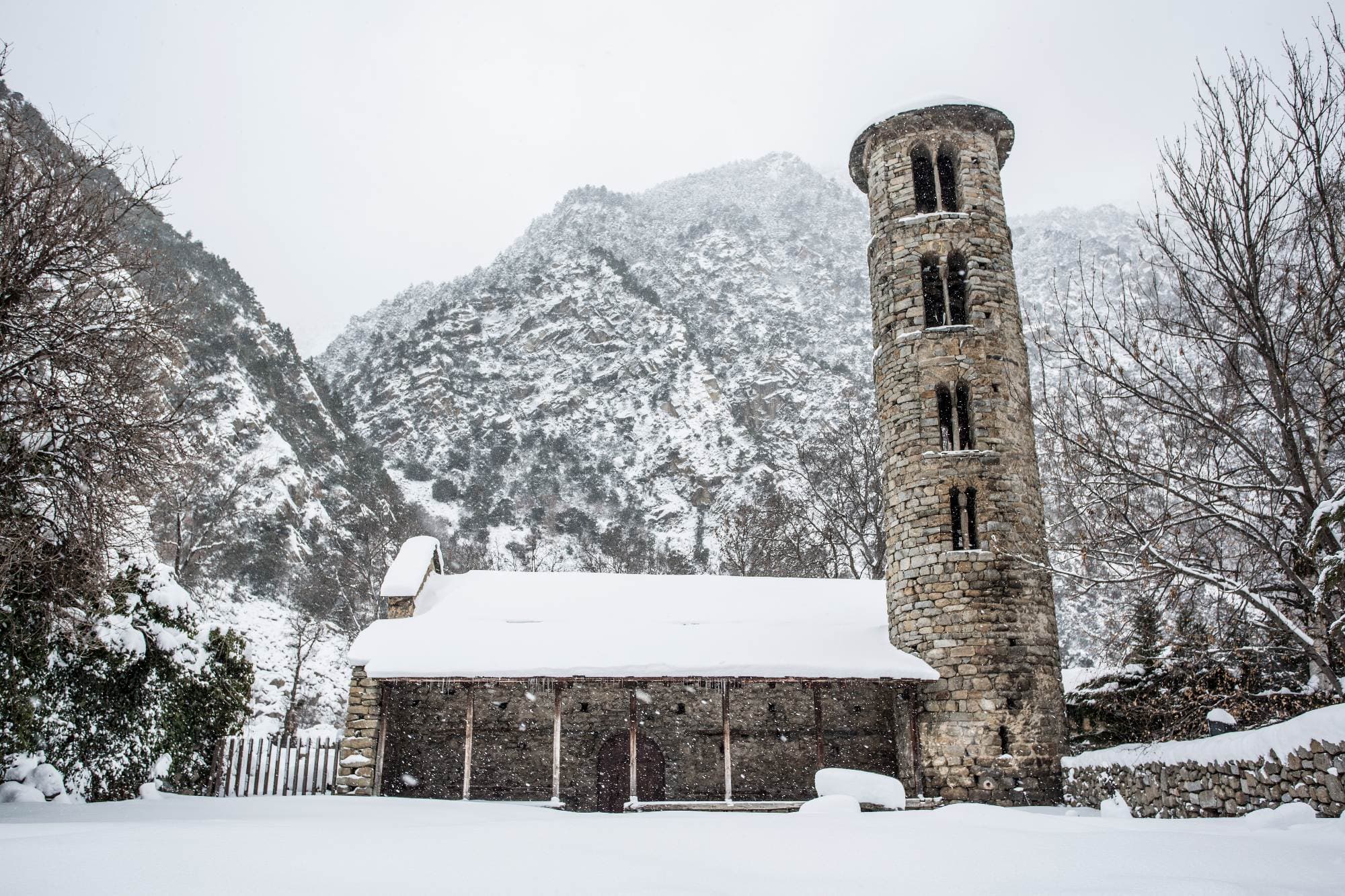
Image courtesy of Grandvalira Resorts and Andorra Turisme
If you want to complement your cultural route with museum tickets, guided tours, or nature activities, book directly here:
Local tips and common mistakes
As a writer and resident, I've seen many visitors make the same mistakes. Here's my checklist to make your experience perfect:
Common mistakes to avoid:
- Thinking they are always open: During winter and low season, many Romanesque churches close their interiors and can only be admired from the outside. Always check opening hours at local tourist offices before you go.
- Forgetting the Passmuseu: If you're going to enter Espai Columba and other museums in the country to understand the historical context, not buying the Andorra Museums Passport is a waste of money. It grants you significant discounts.
- Rushing the route: Romanesque art invites contemplation. Don't try to see all 40 churches and monuments in the country in one day. Select 3 or 4 and enjoy them calmly.
Local recommendations:
- If you visit Sant Miquel d'Engolasters, take the opportunity to hike to Engolasters Lake. It's a flat and spectacular walk.
- The video mapping of Santa Coloma has specific showtimes. Arrive 15 minutes early so you don't miss the immersive show.
Where to sleep during your Romanesque route
To comfortably complete this route, your accommodation's location is key. If you're going to focus on the northern valleys (La Massana and Ordino), looking for options nearby will save you travel time. If you prefer to have everything at hand and do radial routes, Andorra la Vella or Escaldes-Engordany are your ideal operating bases.
In our section sleep, you'll find options for all profiles, from boutique hotels to rural apartments.
Find and book your ideal accommodation at the best price guaranteed!
Frequently asked questions
You may be interested in