In this article
If you're planning your route through the Principality and wondering what to see in the capital, visiting Casa de la Vall should be at the top of your list. As a resident and history enthusiast of our small great country, I assure you that this building is not just another museum; it is the heart and soul of Andorra's history. In this guide, I will tell you exactly what you will find, how to organize your visit, updated summer opening hours, and all the secrets hidden within its centuries-old walls. Get ready to travel back in time and discover why this corner of Andorra la Vella will fascinate you.
When people ask me about what to do in Andorra beyond shopping and skiing, my first answer always points to the historic center of Andorra la Vella. Visiting Casa de la Vall is to fully immerse oneself in the country's idiosyncrasy. We are not talking about an ostentatious palace, but a traditional manor house that, for centuries, was the seat of the Consell General (one of Europe's oldest parliaments, created in 1419).
It is part of the Andorra Museums network and is the most emblematic monument of our political and institutional history. If you want to understand how such a small country hidden in the Pyrenees has maintained its independence and neutrality for centuries, the answer awaits you inside this building.
The history of Casa de la Vall began in 1580, when it was built by the Busquets family, a lineage of wealthy local landowners. Its architecture is typical of an Andorran farmhouse or manor house of the era: robust stone walls, a gabled slate roof, and defensive elements, such as loopholes or a machicolation, which will remind you that in the 16th century, the Pyrenees were not exactly a peaceful place.
In 1702, the building was acquired by the Consell de la Terra (the Andorran parliament) to become its official seat. From then until 2011, the year the new Consell General building was inaugurated right next door, Casa de la Vall hosted parliamentary sessions, served as the seat of the courts of justice, housed the school, and even acted as a prison. Few houses in the world have had so many uses!
When visiting Casa de la Vall, the interior experience is divided into several key rooms that have been preserved with absolute care.
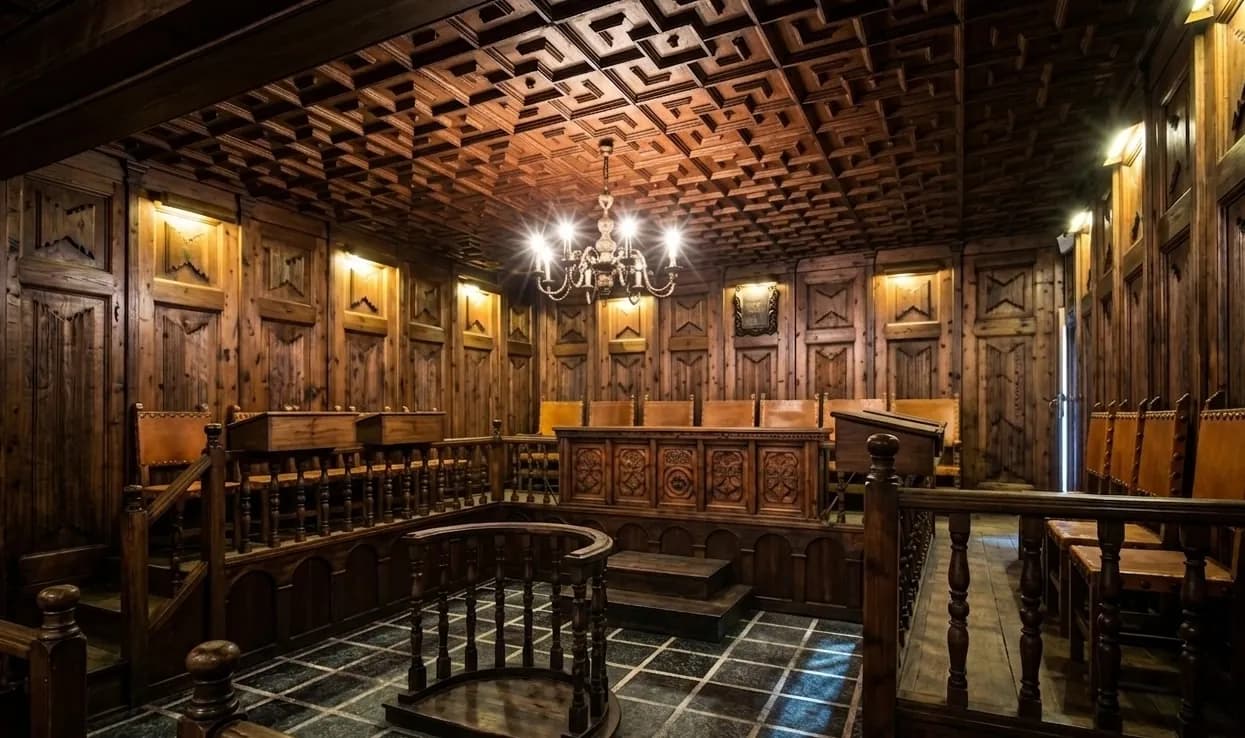
The Ground Floor: The Court of Corts
Upon entering, you will be greeted by the Court of Corts. This room, with its robust wooden furniture, is where justice was administered. You will feel a solemn atmosphere. Here, everything from petty thefts to major crimes was judged.
The Hall of Lost Steps (Sala dels Passos Perduts)
Going up to the first floor, you will reach the Hall of Lost Steps. It was originally the main living room of the Busquets family. Its name is not coincidental: it was the place where people waited before being received by the court or parliamentary councilors, walking back and forth ("losing their steps") due to nerves. Notice the impressive original 16th-century frescoes depicting the Passion of Christ, discovered during a restoration.
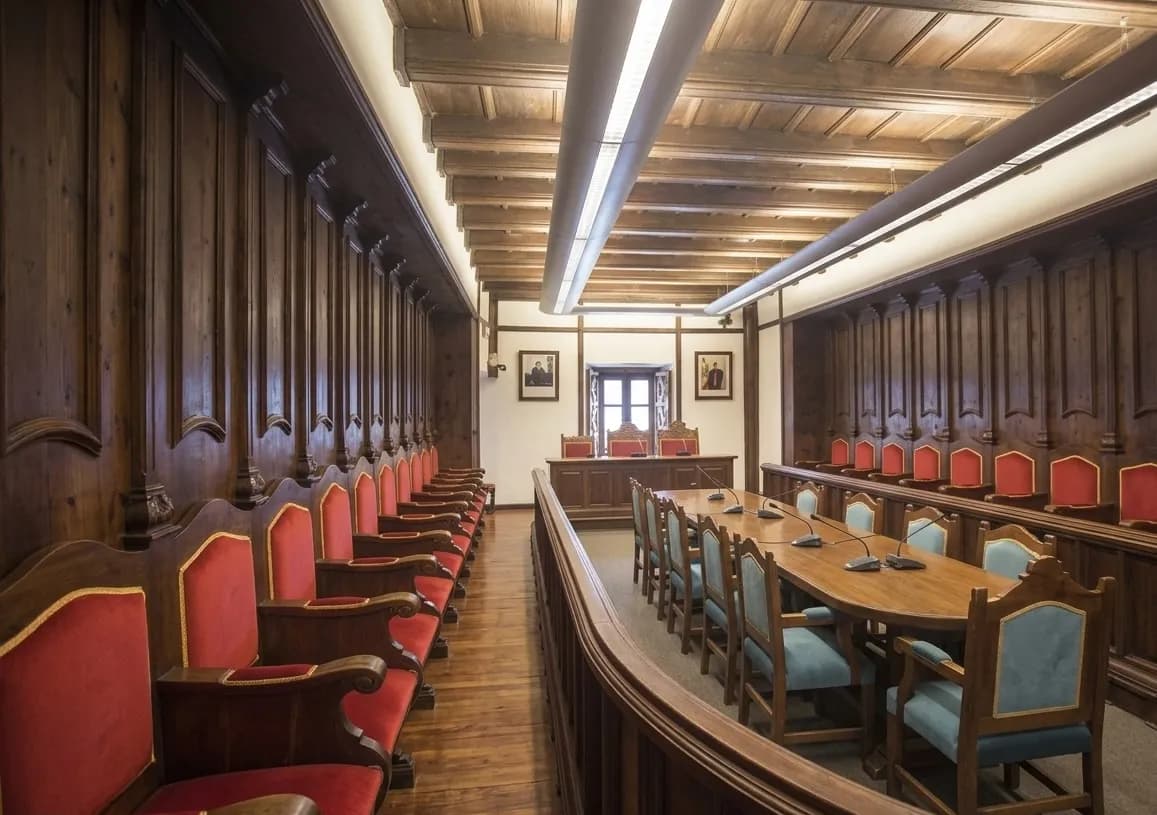
The General Council Chamber
It is the jewel in the crown. Here, the representatives of the Andorran parishes met. In this room is the famous Cabinet of the Seven Keys (Armari de les Set Claus). This wooden cabinet holds the most important documents in Andorra's history (including the "Manual Digest"). The curious thing is that it has seven locks, one for each parish in the country (Canillo, Encamp, Ordino, La Massana, Andorra la Vella, Sant Julià de Lòria, and Escaldes-Engordany). To open it and make important decisions, representatives from all seven parishes had to be present with their respective keys.
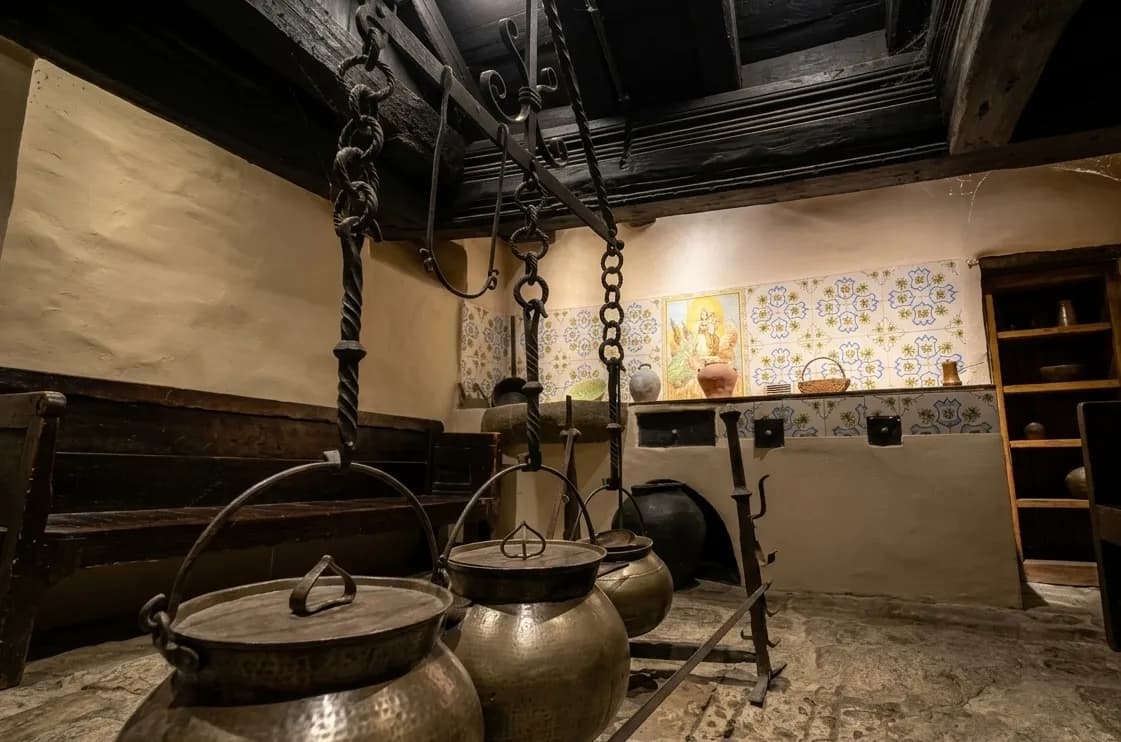
The Traditional Andorran Kitchen
The kitchen is a living testament to daily life in an upper-class Andorran house in past centuries. You will see copper utensils, the immense bell-shaped fireplace where cured meats were smoked, and the cold larder.
The visit doesn't end at the door. The gardens of Casa de la Vall offer a spectacular viewpoint. From here, you will have one of the best panoramic views of the Valira river valley.
In the exterior square, you will find contemporary sculptures of great symbolic value:
- The Dance (La Dansa): By Francesc Viladomat, it represents a couple dancing the traditional Andorran dance, the morrisca.
- The Poet's 7: A monumental work by Jaume Plensa (with his classic numbers and letters) in homage to the 7 valleys of Andorra.
If you are going to plan your trip for the warmer months, you should know that Casa de la Vall adjusts its opening hours for the high season to facilitate tourist arrivals.
Summer Opening Hours (May to October):
- Tuesday to Saturday: from 10:00h to 14:00h and from 15:00h to 18:00h.
- Sundays: from 10:00h to 14:00h.
- Mondays: Closed for staff rest.
Rates (Approx.):
- General admission: €5
- Reduced admission: €2.50 (students, youth card holders, over 65s)
- Free admission: Children under 10 and Andorran citizens.
Local's tip:I recommend booking in advance, as guided groups tend to fill up quickly during July and August due to limited capacity inside the historic building.
The charm of Andorra's Museums is that they adapt to everyone. Here's how to approach your visit according to your plan:
- Activities in Andorra with children:The little ones are fascinated by the story of the Cabinet of the 7 Keys. Present it to them as a tale of knights, secrets, and magic keys, and they will stay engaged throughout the tour.
- Romantic getaways / Cultural:Ideal to combine with a walk through the Barri Antic (Old Quarter) of Andorra la Vella. The surrounding cobblestone streets are full of beautiful spots to photograph at sunset.
To ensure your experience visiting Casa de la Vall is perfect, here's my checklist as a local:
- Mind the slope:Casa de la Vall is located in the upper part of the old town. You can walk up from the shopping center, but if you're with elderly people or baby strollers, use the public elevators that connect Plaza del Poble with the Consell General area.
- Avoid peak hours:Tourist buses usually arrive around 11:30 AM in the morning. I recommend being at the entrance at 10:00 AM to be among the first, or go at 4:00 PM for a much more intimate visit.
- Take the guided tour:The museum offers guided tours for a minimal price. The differential value is not in seeing the stone walls, but in the anecdotes and political intricacies that local guides share with you.
- Parking:Don't try to park at the entrance; it's a pedestrian and institutional area. Parking Prat de la Creu is your best option and is less than a 5-minute walk and elevator ride away.
When looking for options on where to stay, staying in Andorra la Vella is one of the smartest options, as it allows you to combine cultural visits with the best gastronomy and shopping areas, without needing to take the car.
If you're looking for maximum comfort, to be a stone's throw from the historic center, and to ensure an impeccable stay, I strongly recommend exploring the options we have validated from Andorra.com.
The visit to Casa de la Vall lasts approximately 45 minutes to 1 hour, leaving you the rest of the day to explore the country. After your cultural immersion, it's the perfect time to enjoy the leisure, nature, or wellness that our valleys offer.
Whether you're looking to relax in thermal waters, guided mountain routes, or adventure plans to release adrenaline, the offer is huge and just a few minutes from the capital.
Frequently Asked Questions
You may be interested in

Most read