In this article
- Why are there so many summer storms in Andorra?
- Andorra's average altitude and its effect on the climate
- July and August: When are storms most frequent?
- Why do storms form in the afternoon?
- How do storms affect hiking in Andorra?
- Lightning: the greatest risk in exposed areas
- Sudden flash floods in ravines and torrents
- Hail and the sudden drop in temperature
- Mountain rescues in Andorra: a real context
- How to check official weather alerts in Andorra?
- Step by step: how to check the weather before a route
- When to modify or cancel your route?
- What to do if a storm catches you in the mountains?
- Signs indicating an imminent discharge
- Areas to avoid during a storm
- The safety position during a lightning strike
- What not to do
- If someone in the group is struck by lightning
- What mountain shelters are there in Andorra for protection?
- The 4 guarded shelters in summer
- Free shelters: what they offer and how they work
- How to incorporate shelters into route planning
- Which routes have lower risk when the weather is uncertain?
- Don't you have accommodation in Andorra yet?
- What to do in Andorra when it rains and you can't go to the mountains?
- Andorra Mountain Storm Safety Checklist
- Frequently Asked Questions
Summer storms in Andorra are a common phenomenon, especially from midday onwards and during the month of August. They can transform a sunny route into a risky situation in a matter of minutes, particularly above 1,700 meters. This article explains why they occur, how to anticipate them by checking official alerts, what to do if a storm catches you on the trail, and what alternatives you have if the weather isn't favorable.
Why are there so many summer storms in Andorra?
Summer storms in Andorra are frequent because the altitude, terrain, and humidity create the perfect conditions for them to form in just a few hours, especially during the afternoons of the hottest months.
Andorra's average altitude and its effect on the climate
Andorra has an average altitude of 1,900 meters, with valleys starting at 840 meters and peaks exceeding 2,900 meters. The highest peak in the country, Comapedrosa, reaches 2,942 meters. This variation of more than 2,000 meters in elevation within a territory of only 468 km² means that the weather can be very different depending on the area and altitude.
The capital, Andorra la Vella, is at about 1,000 meters. As you ascend above 1,700 meters, atmospheric changes become more abrupt and sudden. At 2,400 meters (as in the Envalira pass), the weather can be completely different from what it is in the valley at that same moment. A clear sky early in the valley bottom does not guarantee that conditions will remain stable in the mid-morning at high altitudes.
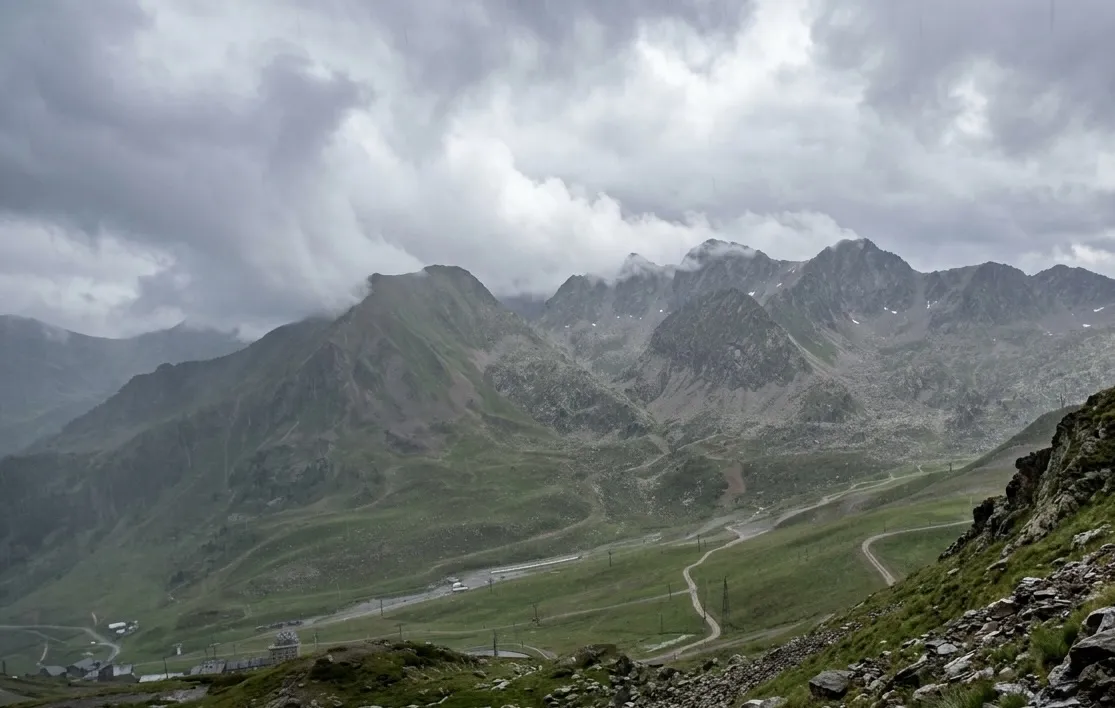
The steep altitudinal gradient also means that weather warnings from the National Meteorological Service are issued by zones —north, central, and south of Andorra— and by altitude. What affects the northern zone may not affect the south, and what happens at 2,200 meters may not be noticed at 1,000.
July and August: When are storms most frequent?
August is the month with the most storm activity in Andorra. Storms are more intense, more frequent, and more often accompanied by hail. July also records summer storms, but with less regularity. Overall in summer, September is the driest month.
Why do storms form in the afternoon?
The most common summer storms are called fair-weather convective storms. They form when the sun heats the valley floor during the morning, moist air rises, and upon reaching a certain altitude, it condenses and generates cumulonimbus clouds. This process typically develops between 12:00 PM and 5:00 PM.
This has a direct practical consequence: routes that allow you to return from exposed areas before midday present a significantly lower risk. Fair-weather convective storms rarely form before 11:00 AM-12:00 PM. Planning your departure time based on this window is one of the most effective decisions a hiker can make.
How do storms affect hiking in Andorra?
Summer storms in Andorra are not just rain. They involve a risk of lightning in exposed areas, sudden flash floods in ravines, hail, and a sharp drop in temperature that can affect reaction capacity. Knowing how they affect each type of terrain is fundamental for making correct decisions on the trail.
Lightning: the greatest risk in exposed areas
Lightning is the most serious danger of a mountain storm. According to AEMET, storms in the mountains are more unexpected, more violent, and more dangerous than on plains. Convex profiles (peaks, ridges, arêtes) and prominent elements like isolated trees or solitary rocks are the points with the highest probability of impact, although it can occur at any point on the terrain: valley bottoms, slopes, or inside a forest.
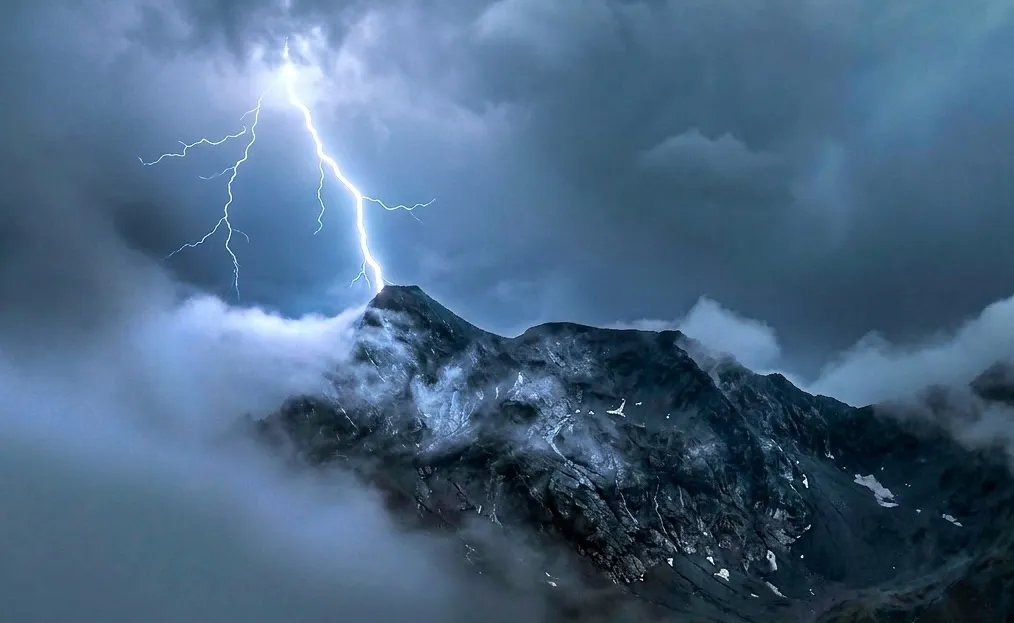
The Spanish Federation of Mountain Sports and Climbing (FEDME) summarizes it thus: "there is no completely safe place, but we can develop strategies that minimize risks."
Sudden flash floods in ravines and torrents
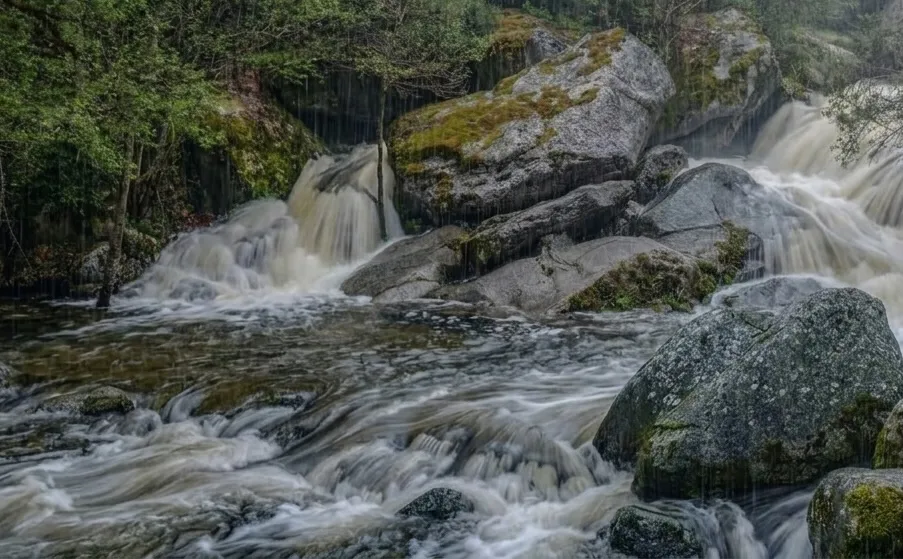
A storm cloud can discharge an enormous amount of water in a very short time. In ravines, canyons, and mountain riverbeds, this causes sudden surges that can arrive without warning even in areas far from the storm's core. Canyoning is the activity most exposed to this risk. But hikers crossing torrents or walking along the bottom of a narrow valley should also consider this: a clear sky at your location does not guarantee that it is not raining heavily several kilometers upstream. In the city, some summers there can also be areas
Hail and the sudden drop in temperature
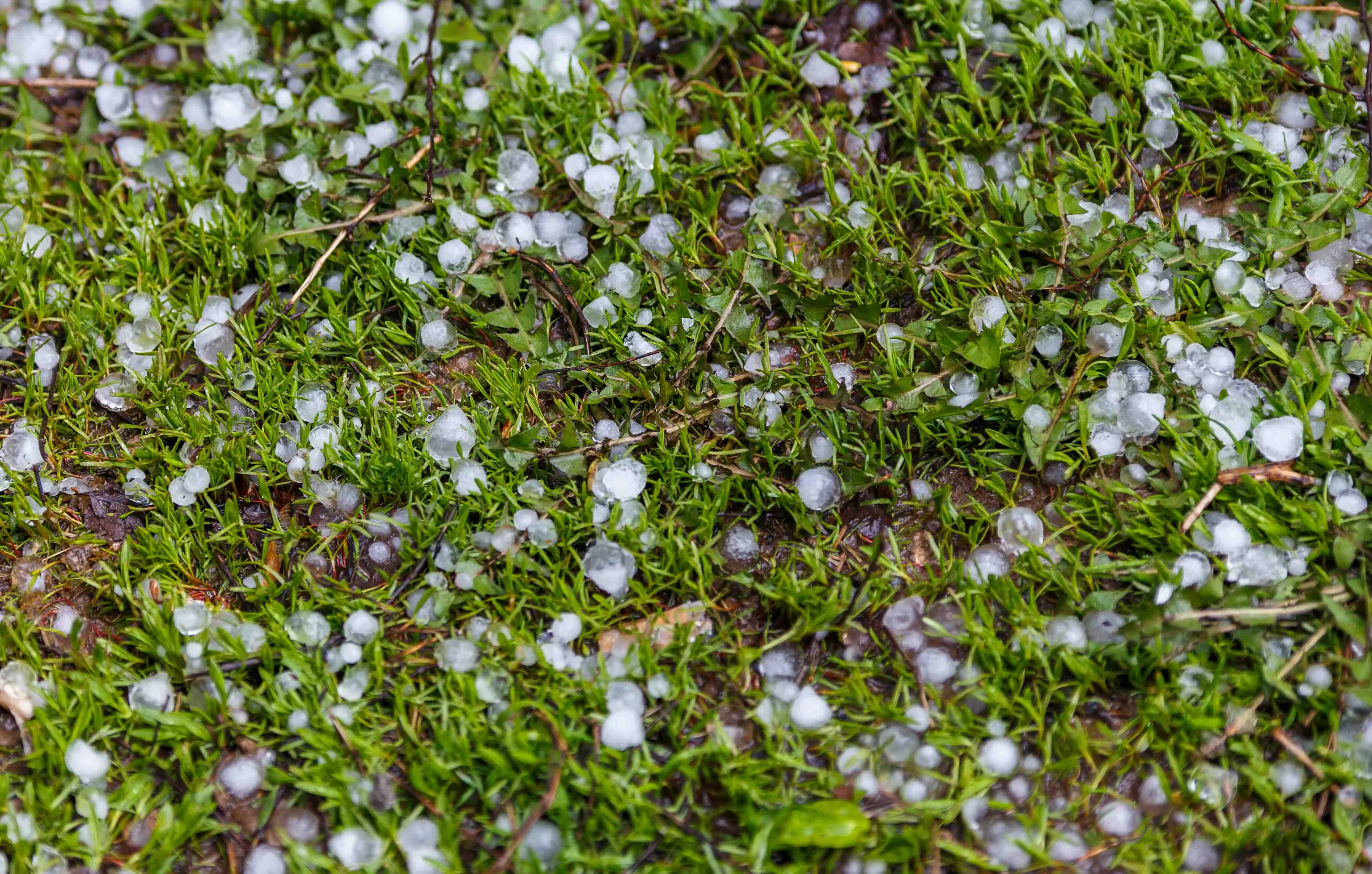
Hail is especially frequent in August and can reach considerable sizes in intense storms. Accompanied by wind, it makes progress and orientation difficult. The temperature drop associated with a storm can be several degrees in a few minutes: going out with insufficient clothing or with wet clothing without an additional layer turns this change into an added risk.
Mountain rescues in Andorra: a real context
The Andorran Fire and Rescue Service (COEX) carried out 163 mountain rescues during 2021, a 20% increase from the previous year. During a summer period (June 15 to September 15), firefighters performed 93 rescues, of which 24 corresponded to hikers.
These figures reflect a real trend: the increase in mountain visitors, combined with conditions that can change in minutes, makes rescues a daily reality during the Andorran summer. These are not exceptional cases.
How to check official weather alerts in Andorra?
The reference source is the Servei Meteorològic Nacional d'Andorra. Checking the forecast before heading out is not optional in Andorra: as the Federació Andorrana de Muntanisme points out, "els canvis en les condicions climàtiques poden ser ràpids i intensos, especialment a les zonas d'alta muntanya."
Step by step: how to check the weather before a route
- Go to meteo.ad.
- Check the detailed forecast for the full day (not just for your departure time), assessing the evolution throughout the entire day.
- Review the active alerts and warnings section: yellow (caution), orange (significant risk), red (very high risk).
- Check the wind, precipitation, and temperature parameters for the altitude you will be at. These parameters are especially relevant in high mountains, where wind chill and exposure change very quickly.
- If there is an orange or red warning for an electrical storm: do not go to exposed areas above 1,700 meters.
The Servei Meteorològic Nacional issues differentiated warnings by geographical zones (north, center, and south of Andorra) and by altitude. A warning might only affect the northern zone or only altitudes above 2,000 meters. Reading the full text of the warning, and not just its color, is essential.
When to modify or cancel your route?
If the forecast includes electrical storms during the hours you will be in an exposed area, adapt your plan: change your departure time, shorten the route, or choose an alternative route at a lower altitude. It is not always necessary to cancel the day. It is necessary not to compromise safety to maintain the original objective.
If you set out in good weather and during the route the sky darkens rapidly, clouds grow vertically, or a sudden wind appears: start descending immediately, without waiting for the storm to break. As the FAM recommends: "si les condicions no són favorables, cal modificar o ajornar l'activitat."
What to do if a storm catches you in the mountains?
If a storm catches you en route, the priority is to move away from the highest risk areas and adopt a safe position as soon as possible. Acting calmly is more effective than trying to run away.
Signs indicating an imminent discharge
These signs should make you act immediately (source: FEDME):
- Body hair stands on end without apparent cause.
- Metal objects —poles, buckles, carabiners— emit a buzzing sound or produce sparks.
- An ozone smell appears in the air.
- Cumulonimbus clouds grow rapidly vertically and darken at the base.
If you perceive any of these signs, the correct response is to lie face down immediately.
Areas to avoid during a storm
- Ridges, arêtes, and summits: these are the highest risk points for impact. If a storm catches you on a summit, descend as quickly as possible, avoiding moving along arêtes.
- Isolated trees and protruding rocks: they act as natural lightning rods.
- Bodies of water: lakes, torrents, and rivers pose a double risk —lightning and sudden flash floods.
- Power lines and chairlifts.
- Tents with metal poles: they do not protect from lightning.
- Wet rock faces: electrical discharges follow wet surfaces. If you seek shelter on a wall, keep at least one meter away from the rock.
A dense, uniform forest is safer than a clearing. Look for the densest area, away from trees that stand out in height above others.
The safety position during a lightning strike
When the electrical storm is already upon you and you cannot get away in time:
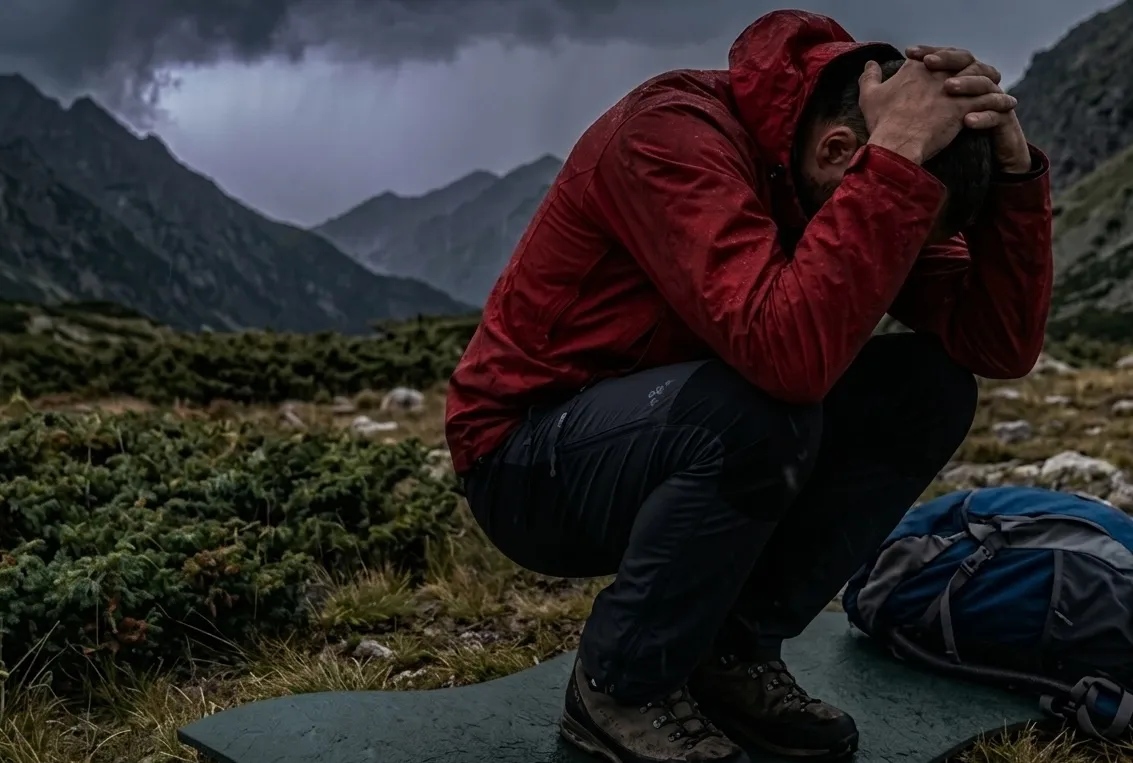
- Crouch down on your feet, with your knees together.
- Place your hands on your knees and your head between them.
- Minimize your contact surface with the ground. If you have a mat or dry rope, place it between yourself and the ground.
- Never lie down on the ground.
- Never lean against a wall or rock.
- If you are in a group: separate yourselves by more than six meters between people to reduce the number of affected individuals in case of ground current.
What not to do
- Do not run. Running creates a trail of ionized air that increases the risk of impact.
- Do not use your mobile phone while lightning strikes.
- Do not take shelter under an isolated tree, even if it's the only visible shelter.
- Do not carry poles on your shoulders: metallic edges act as lightning rods. Store them in your backpack.
- Do not underestimate flash floods. If you are near a stream, move away even if it's not raining in your area.
- Do not stay still in an exposed area hoping it will "pass quickly".
If someone in the group is struck by lightning
A person struck by lightning is not electrified and can be touched without risk. Act as follows:
- Verify the area is safe before approaching: lightning can strike twice in the same place.
- Assess vital signs.
- If the person is not breathing or has no pulse: begin Basic Life Support.
- Call 112 immediately. Provide your exact location, the number of affected people, and the condition of each.
- Cover them to prevent hypothermia. Do not leave them alone.
Emergency numbers in Andorra
Service | Number |
Mountain Rescue | 112 |
Andorra Police | 110 |
Firefighters / COEX | 118 |
Always go out with your mobile phone 100% charged and inform a trusted person about your itinerary and estimated return time before leaving. In high mountain areas, coverage may be limited: if you have no signal, try moving to a more open or higher altitude area before calling.
What mountain shelters are there in Andorra for protection?
Andorra has 26 mountain shelters: 4 guarded (with catering service in season) and 22 free (open all year, unguarded). Knowing their location before setting out is a safety measure as important as carrying a raincoat.
The 4 guarded shelters in summer
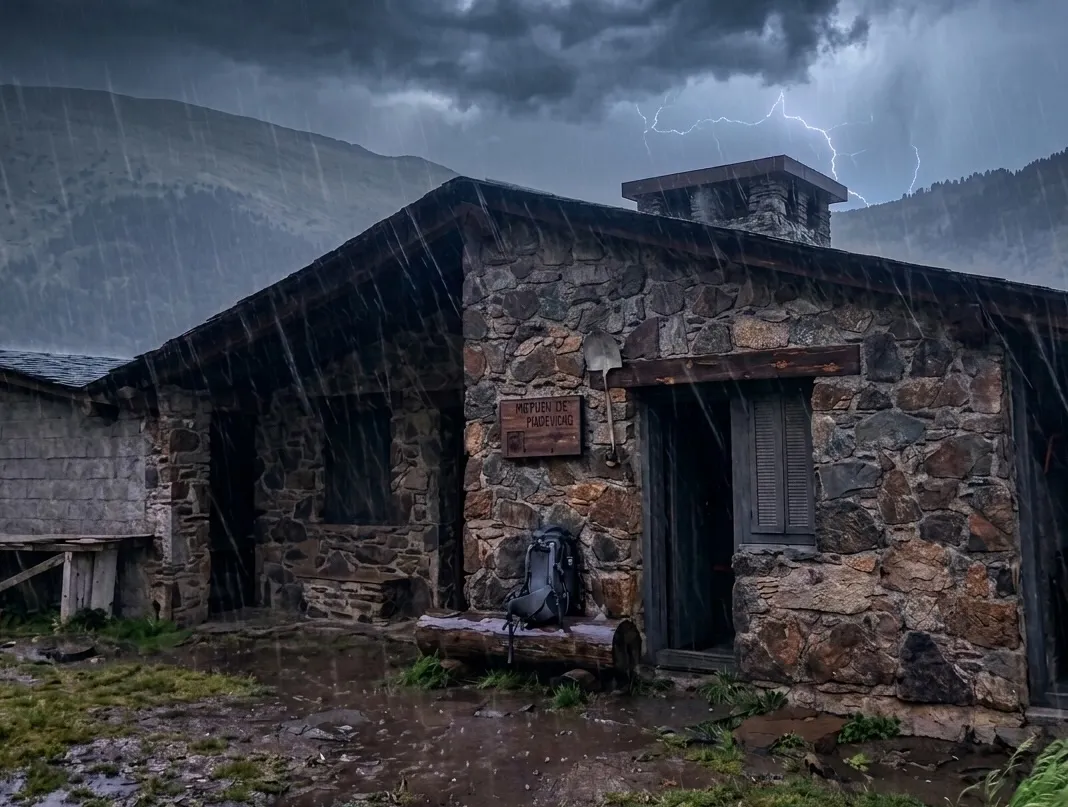
Guarded shelters offer catering service, blankets, and in some cases, showers. They also provide information on trail conditions and local weather. In the absence of the warden, most maintain a space available for overnight stays.
Shelter | Parish | Altitude | Capacity | Phone | Summer opening |
Refugi de l'Illa | Encamp | 2,488 m | 50 | +376 775 776 | Jun 1 – Nov 1 |
Refugi de Juclar | Canillo | 2,310 m | 50 | +376 678 145 | Jun – Sep |
Refugi del Comapedrosa | La Massana | 2,265 m | 50 | +376 327 955 | Jun 1 – Oct 12 |
Refugi Borda de Sorteny | Ordino | 1,965 m | 40 | +376 846 446 | Jun – Sep 30 |
Free shelters: what they offer and how they work
The 22 shelters are distributed throughout the Andorran territory, at altitudes ranging from 1,865 meters (Refugi de Francolí, Sant Julià de Lòria) to 2,610 meters (Refugi dels Estanys Forcats, La Massana). They are open all year round, unguarded and without catering service. They offer a basic space for shelter and, in many cases, capacity for overnight stays.
They do not require reservations or have a cost, but they also do not have a guaranteed water supply or staff. They are a valid emergency resource, not a planned destination without prior preparation.
How to incorporate shelters into route planning
Before setting out, identify the shelters closest to the highest altitude and most exposed section of your route. If a storm catches you halfway, knowing where the nearest shelter is can make the difference between a correct decision and an improvised one.
Download the Govern d'Andorra shelter map available at govern.ad before setting out, while you still have coverage and battery.
Which routes have lower risk when the weather is uncertain?
When the forecast includes the possibility of a storm, the best option is to choose routes that run through wooded areas or at low altitudes, allowing for easy abandonment of the route and not keeping the hiker exposed on ridges or open areas during the hours of greatest risk.
It is recommended to undertake itineraries above 1,700 meters from late June to late September, always adjusting to the day's conditions. When the forecast is not favorable, there are perfectly adapted lower altitude alternatives for those days.
A practical criterion: plan your sections above 2,000 meters to complete them before 1:00 PM. Fair-weather convective storms rarely break out before noon.
Also keep in mind that some areas restrict private vehicle access during July and August. The Vall d'Incles road, in Canillo, requires the use of public transport during that period. Plan in advance how to get to your route's starting point.
Don't you have accommodation in Andorra yet?
If you are planning a hiking getaway to Andorra, booking accommodation in advance will allow you to better organize your stay and have a base from which to adapt your plans if the weather changes.
Find your accommodation in Andorra and prepare your getaway with peace of mind, whether you plan to do mountain routes or want to combine hiking with other activities during your stay.
What to do in Andorra when it rains and you can't go to the mountains?
A summer storm doesn't have to ruin the day. Andorra offers real alternatives to make the most of bad weather hours.
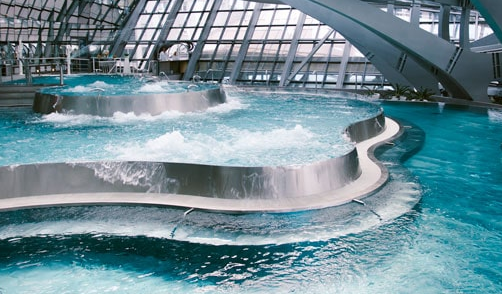
Thermal baths and spas: Several hotels and wellness centers have thermal or spa facilities. An especially recommended option if you have been hiking intensely for several days and your body appreciates the rest.
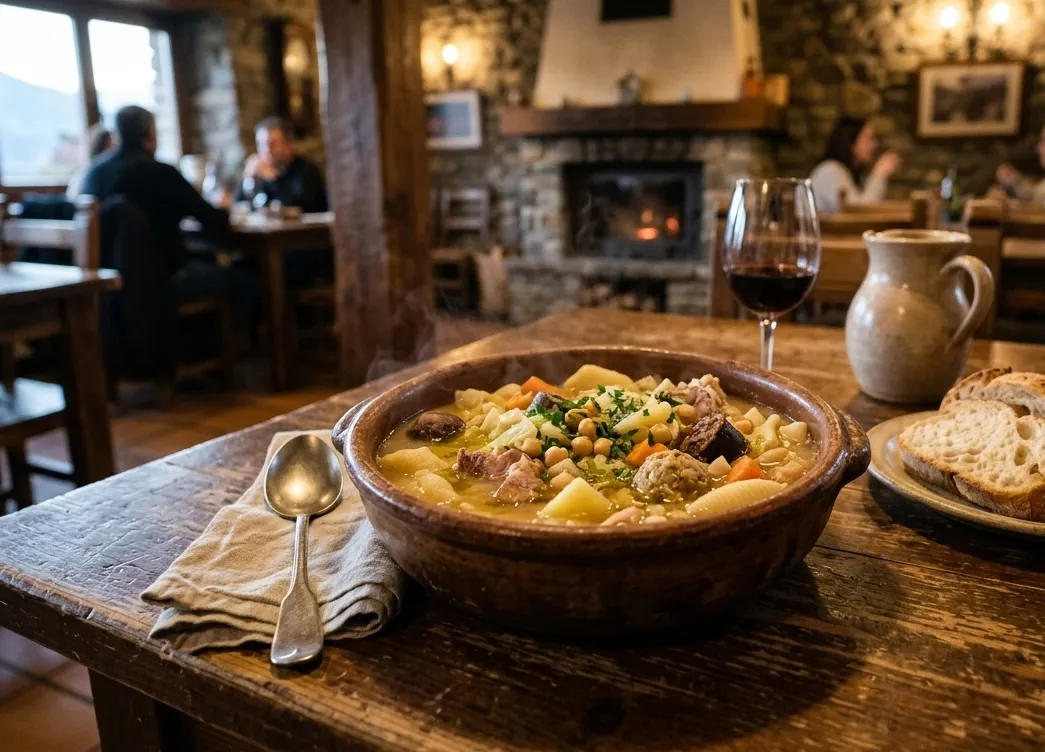
Andorran gastronomy: A rainy day is a good opportunity to sit in a restaurant and discover local cuisine: trinxat, escudella, artisan sausages, or grilled meats are some of the country's gastronomic highlights.
Shopping and duty-free: Andorra la Vella concentrates one of the largest duty-free shopping offers in Europe. Technical mountain gear, electronics, perfumery, and food are some of the most demanded categories.
Museums and heritage: The National Automobile Museum, the Tobacco Museum, or the parish houses offer a different view of Andorra for those who want to know it beyond the mountains.
Andorra Mountain Storm Safety Checklist
Do this | Don't do this |
Check the weather before leaving | Leave without checking the day's forecast |
Plan to return from high areas before noon | Stay in an exposed area waiting for it to pass |
Put metal poles in your backpack at the first sign of a storm | Carry poles on your shoulders during the storm |
Adopt a squatting position with knees together | Lie down on the ground |
Look for a dense and uniform forest | Take shelter under an isolated tree |
Stay away from bodies of water and ravines | Stay near streams or lakes |
Separate more than 6 m from your companion | Stay grouped during the storm |
Call 112 if there are injured, with your exact location | Attempt to bring down an injured person without support from rescue services |
Cover the injured person to prevent hypothermia | Ignore the sudden drop in temperature |
Always leave with your phone at 100% and inform about your itinerary | Depend on a low-battery phone in high mountains |
Summer storms are part of the character of the Andorran mountains. They are not an anomaly: they are part of the territory. The difference between a safe day and an emergency situation is not about luck, but about preparation.
Consult meteo.ad before heading out, planning your schedule to avoid peak risk hours, knowing the shelters on your route, and knowing how to act if a storm surprises you are the four measures that make that difference. Everything else (equipment, physical condition, experience) helps, but does not replace these four.
If the weather isn't good, it doesn't mean you have to give up enjoying Andorra. The valleys offer numerous alternatives to make the most of the day, and when the forecast is favorable again, the mountain will still be there, waiting for you to resume your route with better conditions and greater safety.
Frequently Asked Questions
You may be interested in
Most read