In this article
- Why Andorra is a leading destination for stargazing
- Andorra Comapedrosa Starlight: the certification that explains it all
- The best stargazing viewpoints in Andorra
- Coll de la Botella viewpoint
- Roc de la Sabina Viewpoint
- Comapedrosa Natural Park
- Tristaina Solar Viewpoint (Ordino Arcalís)
- Otros puntos con cielo oscuro en Andorra
- Comparativa de miradores: acceso, nivel y qué esperar
- Andorra's astronomical calendar in 2026
- The Perseids and the solar eclipse of August 2026
- Comapedrosa Astronomical Festival
- Activities organized by season
- How to get to each viewpoint: practical access guide
- Coll de la Botella
- Roc de la Sabina
- Comapedrosa Natural Park
- Tristaina Solar Viewpoint (Ordino Arcalís)
- Astrotourism experiences available in Andorra
- Where to stay near the Starlight viewpoints
- Common mistakes when planning a stargazing night in Andorra
- Frequently Asked Questions
Andorra is one of the few places in southern Europe where you can still look up at the night sky and be left speechless. Its altitude, mountains and very low levels of light pollution make the Principality an increasingly popular destination for astrotourism. If you’re looking for the best places to see the stars in Andorra, you’re in the right place: in this guide, I’ll show you the best viewpoints, how to get there, the best times to visit and what to expect depending on your level of experience.
If you already know where you want to go and are looking to plan a more detailed night-time adventure, we also recommend our article on astronomical observation in Andorra, where you’ll find night route guides, equipment preparation tips and safety advice for high-altitude mountain environments.
Why Andorra is a leading destination for stargazing
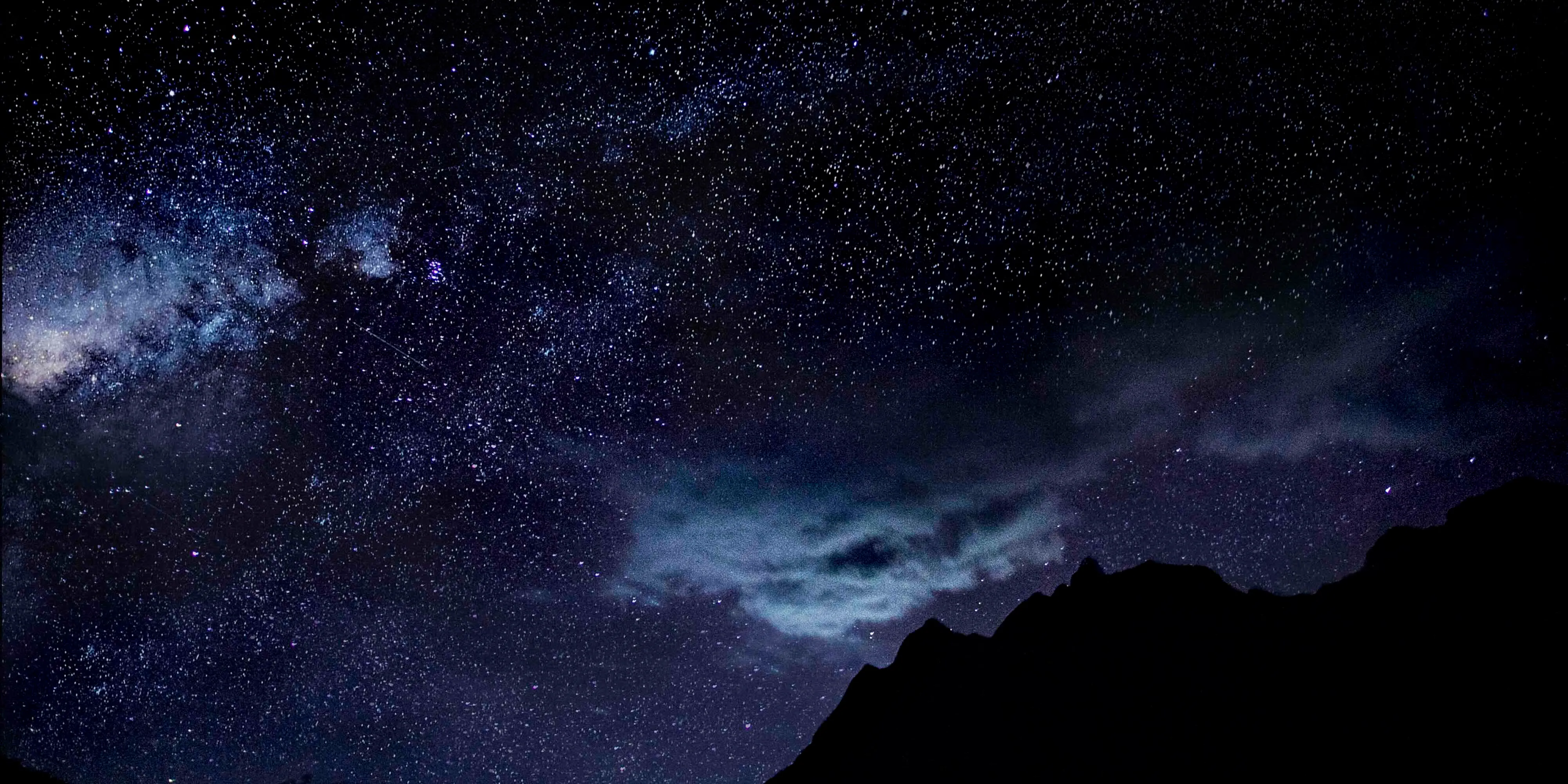
Living in Andorra comes with many privileges, and one of the most appreciated when a clear night arrives is this: looking up and truly seeing the stars. Not the faint, washed-out version of the night sky you get in most European cities, but the full spectacle of the firmament, with the Milky Way visible to the naked eye on the clearest nights.
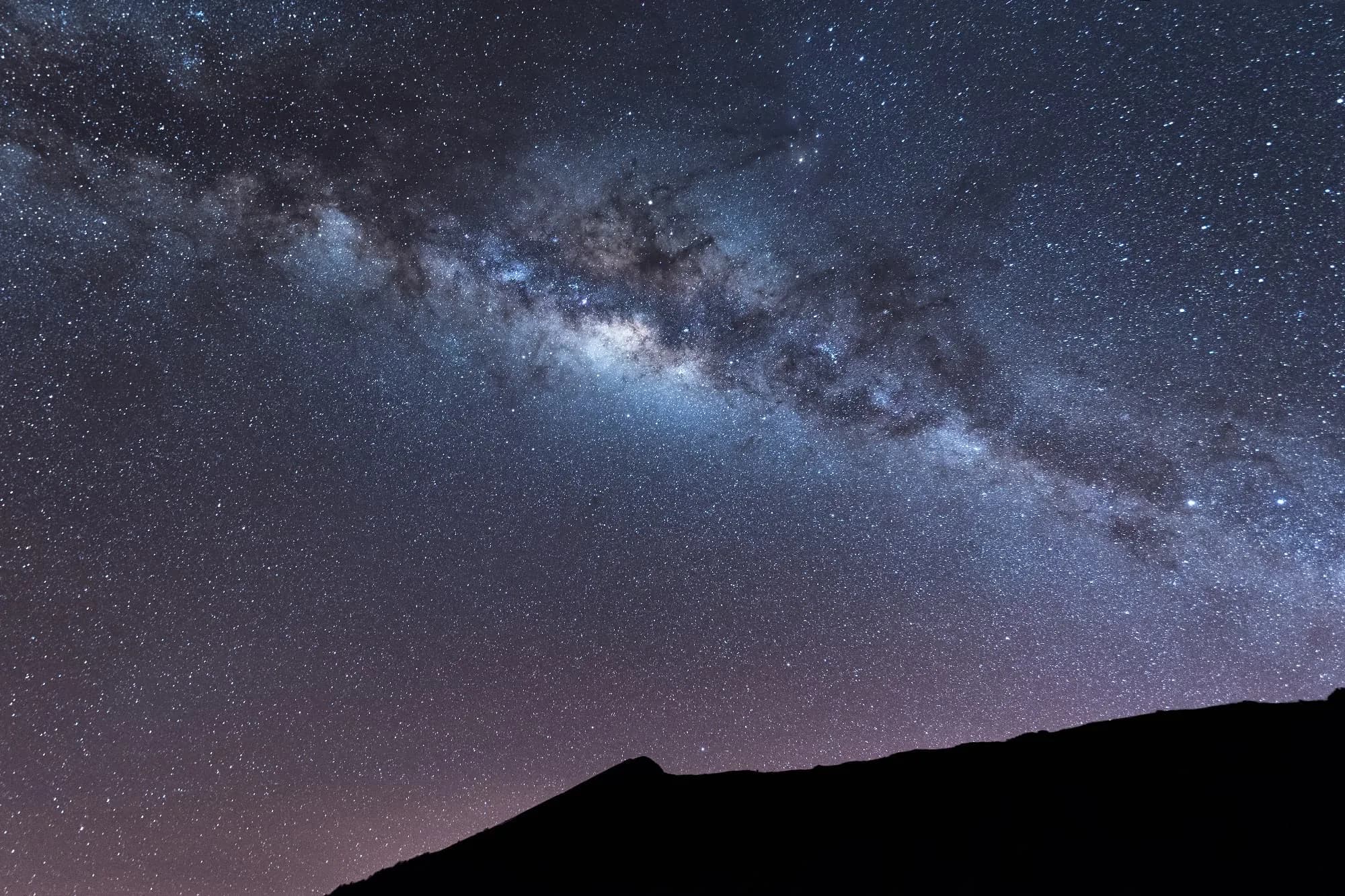
The Principality brings together three conditions that rarely occur at the same time:
High altitude. Most of the country lies above 1,000 metres, and the most interesting observation spots are located above 1,800 and 2,000 metres. The higher you go, the less atmosphere there is between you and the stars, and the less humidity there is to blur the view.
Low light pollution. Andorra is a small country, with a modest capital city and mountain parishes that barely illuminate the horizon. In areas such as La Massana or the Comapedrosa surroundings, the sky reaches levels of darkness that are increasingly difficult to find in Western Europe.
Institutional protection of the night sky. It is not just a matter of geographical luck. Andorra, and specifically the parish of La Massana, has actively committed to preserving its dark skies, with international certifications that recognise the astronomical quality of the territory.
The result is a destination where astrotourism has genuine potential — not as a marketing claim, but as a truly valuable experience. And in 2026, with several exceptional astronomical events on the horizon, the conditions for visiting Andorra and discovering its night sky could not be better.
Andorra Comapedrosa Starlight: the certification that explains it all
If you’re looking for information about dark skies in Andorra, sooner or later you’ll come across the word Starlight. It’s worth understanding what it means and why it matters.
The Starlight Foundation, created by the Canary Islands Institute of Astrophysics (IAC), is the organisation responsible for certifying destinations around the world based on the quality of their night skies and their commitment to preserving darkness. This certification is not just another tourism label: it requires objective measurements of sky quality, low levels of light pollution and genuine astrotourism infrastructure.
In January 2023, the parish of La Massana was awarded the double Starlight certification: Starlight Tourist Destination for the entire parish, and Starlight Reserve specifically for the Comapedrosa Natural Park area. This double recognition makes La Massana the first Andorran territory to receive this distinction and places Andorra Comapedrosa among the most outstanding astronomical destinations in southern Europe.
What is especially relevant looking ahead to 2026 and 2027 is that Andorra Comapedrosa has been chosen as the host destination for the International Starlight Astrotourism Meeting in 2027, one of the leading global events in this field. This is far from a minor achievement: in 2026, the same international gathering will take place in Montsec. Its arrival in Andorra in 2027 is a recognition of years of work developing a serious astrotourism destination.
For visitors, all of this translates into something tangible: La Massana has designated viewpoints, certified Starlight guides, year-round organised activities and an active commitment from local authorities to protect the night sky. You are not arriving somewhere to simply improvise; you are arriving in a territory that has been carefully prepared to welcome you.
The best stargazing viewpoints in Andorra
Coll de la Botella viewpoint
Coll de la Botella is the reference viewpoint for dark skies in Andorra and the most popular observation spot for organised astrotourism activities in La Massana.
Located in the parish of La Massana, at more than 2,000 metres above sea level, on the road connecting Pal and Arinsal, what makes this viewpoint especially valuable is its combination of true altitude and easy access. You can drive directly to the site, where you’ll find a large paved parking area, and no previous hike is required to start stargazing.
The viewpoint is equipped with astronomical observation tables that help visitors identify constellations and features of the night sky. They are not just decorative signs; they are orientation tools designed to make exploring the sky easier for visitors with no previous experience.
From Coll de la Botella, you can enjoy 360-degree views over the La Massana valley, with an open horizon in every direction. On clear nights around the new moon, the Milky Way is perfectly visible to the naked eye.
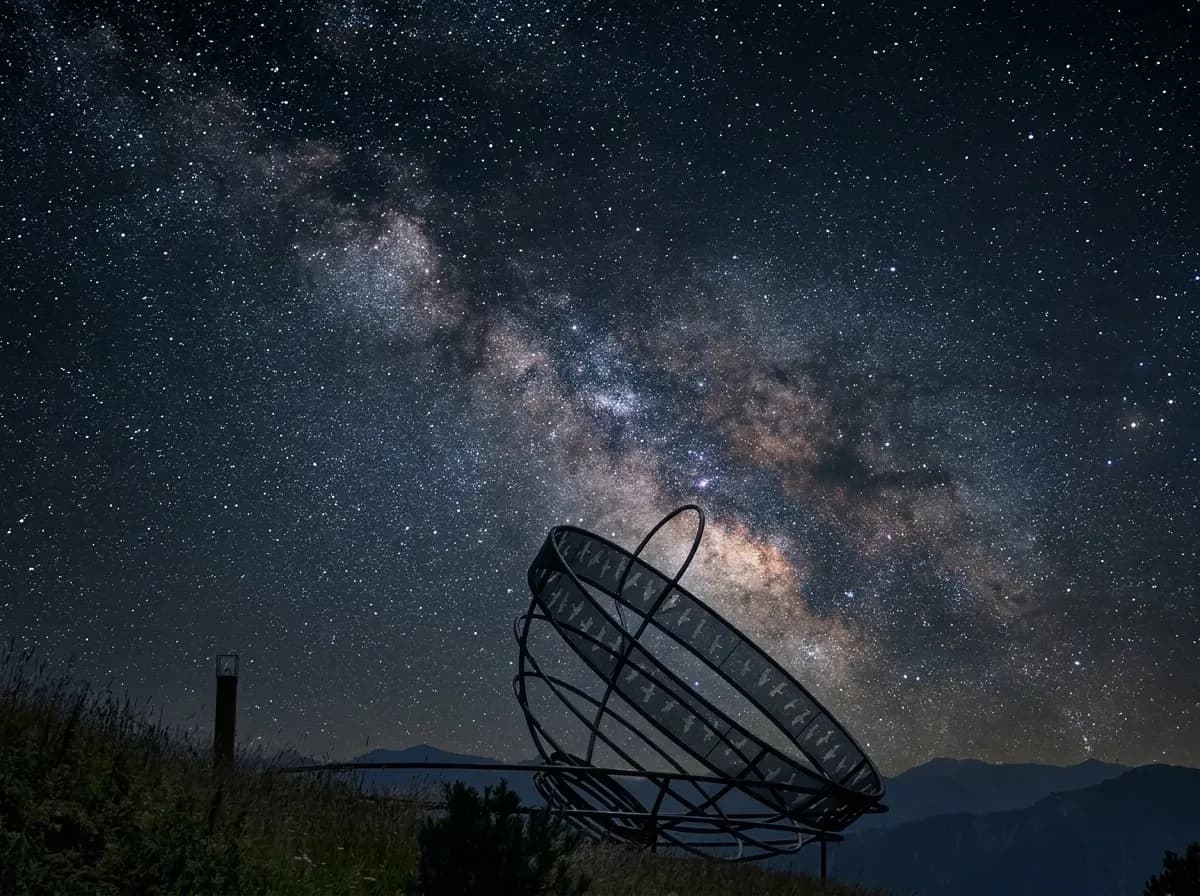
The La Massana Parish Council organises guided stargazing sessions here during July and August (every Tuesday and Saturday) with Starlight-certified guides. These approximately three-hour experiences teach participants how to identify constellations, discover the mythology behind them and understand how to navigate using a star map. To take part, you only need suitable hiking footwear and warm clothing; everything else is provided by the guides.
In winter, from December 1st, on Fridays, Saturdays, and holidays, night snowshoe excursions are organized, which also pass through Coll de la Botella. It's a different way to experience the dark sky: walking through snow, in silence, with the winter firmament above you.
Ideal for: first visit, families, basic night photography, groups, organized outings.
Level: easy (car access to the spot).
Local tip: arrive 45 to 60 minutes before dark to get acquainted with the surroundings in daylight and choose the best spot. Even in summer, it gets cold here when night falls.
Roc de la Sabina Viewpoint
Roc de la Sabina is the second official celestial viewpoint in La Massana, and it has a slightly more panoramic character than Coll de la Botella.
It is located at 1,896 meters above sea level, on the CS-520 road that goes up towards Arinsal. Like Coll de la Botella, access is by road and there is a parking area, although the surroundings offer a different visual opening: from here, the views point more directly towards the Comapedrosa Natural Park and the surrounding massif.
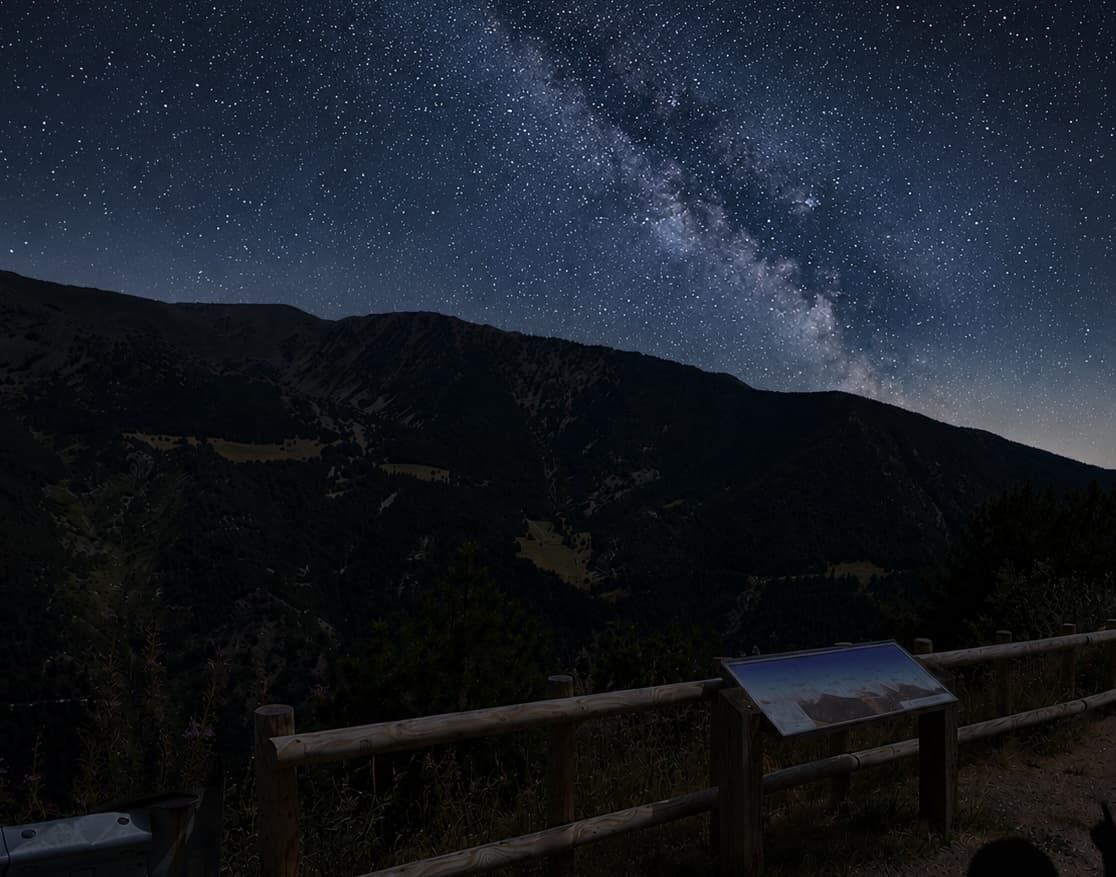
The viewpoint also features astronomical interpretation tables, and in season (especially in September, at the end of the astronomical summer), specific outings with telescopes are held here. In 2024, an outing was documented on September 30th with telescopes enabled for collective observation, a format that has been repeated in subsequent years.
It is a somewhat less crowded spot than Coll de la Botella, making it an interesting option for those seeking more tranquility. It also works very well for night landscape photography with Comapedrosa as a backdrop.
Ideal for: night photography, independent observers, combination with daytime hiking in the area.
Level: easy (car access).
Local tip: scout the spot beforehand during daylight hours. At night, it's easy to confuse parking areas and access points if you don't know the road.
Comapedrosa Natural Park
If Coll de la Botella and Roc de la Sabina are the easily accessible viewpoints, the interior of the Comapedrosa Natural Park is the high-level dark sky setting.
This natural park, located in the northwest of La Massana, is home to Andorra's highest peak: Pic del Comapedrosa, at 2,942 meters. And it is precisely this area that obtained the certification of Starlight Reserve, the highest degree of protection and quality of the night sky within the Starlight Foundation system.
Entering the park at night is a different experience from staying at a roadside viewpoint. The almost total absence of artificial light, sustained altitude, and high mountain silence create observation conditions that are difficult to match in Southern Europe. On optimal nights, the sky appears populated with a density of stars that seems almost unreal if you are accustomed to an urban environment.
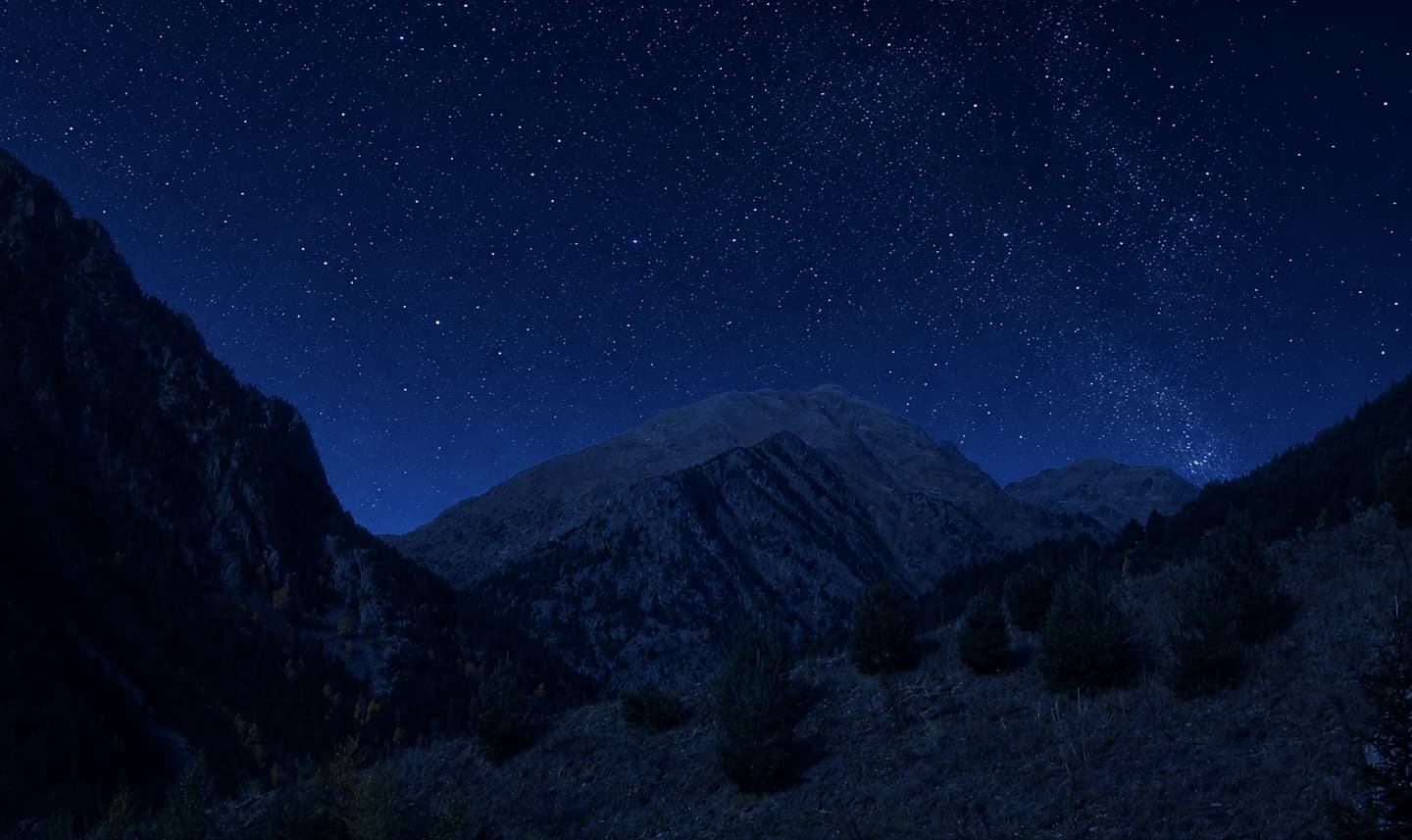
One must be honest about the logistics: accessing the interior of the park at night without prior experience or a guide is not recommended. The routes are not lit, the terrain is real mountain, and night temperatures at these altitudes can be very low even in summer. The most sensible option to enjoy this sky without unnecessary risks is to participate in one of the organized activities that lead to this area.
The Refugi del Comapedrosa, located at 2,260 meters within the park, is a good base for anyone who wants to experience a full night of dark sky in the high mountains. It has a capacity for 49 people, offers local gastronomy, and is available approximately between June and October. If you are considering this option, also consult our article on high mountain camping in Andorra to guide you on the logistics of sleeping in the Andorran mountains.
Ideal for: experienced observers, astrotourism enthusiasts, deep-sky photographers.
Level: medium-high (requires mountain planning).
Local tip: if you don't know the terrain, hire a guided activity. The sky is spectacular, but safe access matters more than the best possible viewpoint.
Tristaina Solar Viewpoint (Ordino Arcalís)
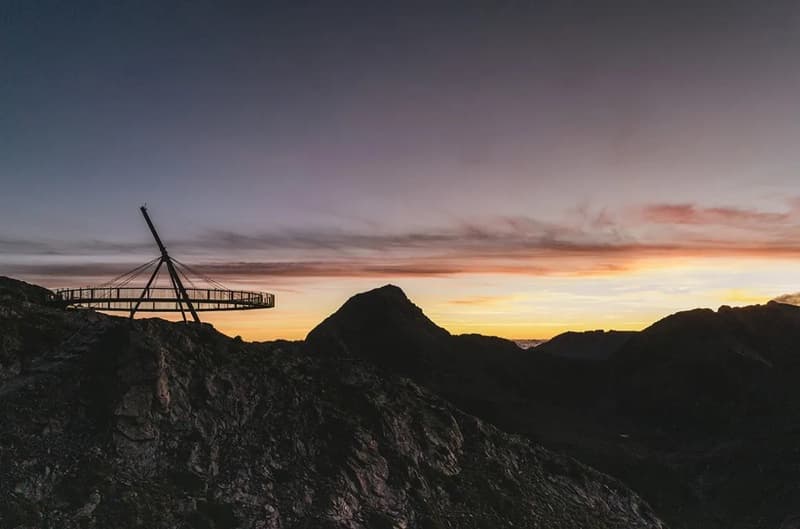
El Mirador Solar de Tristaina no es un mirador específico de astroturismo, pero merece un lugar en esta guía por una razón simple: está a 2.701 metros de altitud, ofrece vistas panorámicas sobre los Estanys de Tristaina y el entorno de Ordino, y desde allí el cielo es, sencillamente, espectacular.
El mirador se encuentra en la cima del Pic de Peyreguils, en la estación de Ordino Arcalís. El acceso se realiza mediante telecabina desde la base de la estación (en verano, con el forfait de temporada estival), o a pie para quienes hagan la subida andando.
Siendo realistas: este no es un mirador pensado para observación nocturna autónoma. La telecabina funciona en horario diurno y la logística de quedarse allí de noche es compleja sin organización previa. Pero como punto de referencia para entender las condiciones de cielo que existen en Andorra a esas altitudes, y como destino de tarde-noche en contexto de actividades organizadas, es un enclave extraordinario.
La vista hacia los tres lagos de Tristaina con el cielo estrellado al fondo es uno de los paisajes nocturnos más bonitos del país. Si alguna vez tienes la oportunidad de verlo en condiciones, no la dejes pasar.
Ideal para: excursionistas con experiencia, combinación con actividades de verano en Ordino Arcalís.
Nivel: medio-alto (requiere planificación y condiciones de acceso específicas).
Consejo local: más adecuado como destino diurno o de atardecer. Para observación nocturna autónoma, los miradores de La Massana son opciones más prácticas.
Otros puntos con cielo oscuro en Andorra
La Massana concentra la oferta astronómica oficial, pero no es el único lugar de Andorra donde la noche ofrece un cielo de calidad.
Canillo y sus altos valles. La parroquia de Canillo, especialmente en sus zonas de mayor altitud alejadas del corredor de la CG-2, tiene cielos oscuros y paisajes de alta montaña que compensan cualquier desplazamiento. El entorno de Grandvalira en temporada estival, fuera de las pistas, es tranquilo y con poca contaminación lumínica.
Ordino. La parroquia de Ordino, especialmente en sus sectores más alejados del núcleo urbano, mantiene condiciones de oscuridad por encima de la media. Es una zona muy adecuada para principiantes que quieran alejarse un poco del turismo concentrado en La Massana.
Pas de la Casa y los altos del Envalira. El Port d'Envalira, el paso de montaña más alto de los Pirineos, está a más de 2.400 metros. La zona es muy abierta y, cuando el tiempo acompaña, ofrece un horizonte de 360 grados que hace las delicias de los fotógrafos de cielo nocturno. No tiene la infraestructura Starlight de La Massana, pero las condiciones naturales son inmejorables.
Dicho esto, si buscas la combinación de cielo de calidad certificada + actividades organizadas + infraestructura de acceso pensada para astroturismo, La Massana sigue siendo la referencia clara.
Comparativa de miradores: acceso, nivel y qué esperar
Viewpoint / Area | Altitude | Access | Level | Best for |
Coll de la Botella | +2,000 m | Car to the point | Easy | First visit, families, groups, guided activities |
Roc de la Sabina | 1,896 m | Car to the point | Easy | Photography, quiet observation, solo outings |
P.N. Comapedrosa | +2,200 m | On foot / with guide | Medium-High | Deep sky, advanced astrotourism, overnight in a refuge |
Tristaina Solar Viewpoint | 2,701 m | Gondola (daytime) | Medium-High | Spectacular sunset, organized experiences |
Ordino / Canillo (high area) | Variable | Car + hiking | Easy-Medium | Uncongested alternative to La Massana |
Port d'Envalira | +2,400 m | Car | Easy | 360° photography, open horizon |
Andorra's astronomical calendar in 2026
2026 is an exceptional year for astronomy from Southern Europe, and Andorra is in a perfect position to take advantage of it.
The Perseids and the solar eclipse of August 2026
The August 12, 2026 is, in astronomical terms, one of the most special dates of the decade. On that day, two extraordinary phenomena coincide:
In the late afternoon/evening, there will be a total solar eclipse visible from Southern Europe. Although Andorra will not be in the exact path of totality (the central axis passes further south), solar coverage from the Principality will reach very high percentages. At the Pal Arinsal station, preparation workshops were already organized in June 2026 with expert Josep Massalles so that participants would be well prepared for this date, with certified reusable solar filter glasses for the main event on August 12.
A few hours later, in the early morning, the Perseids peak, the most popular meteor shower of the year. Under normal conditions, the Perseids offer between 50 and 100 meteors per hour under dark skies. In 2026, conditions are exceptional: the peak coincides with a new moon, meaning there will be no moonlight to interfere with observation. Specialists suggest that this could be one of the best Perseids editions in recent years.
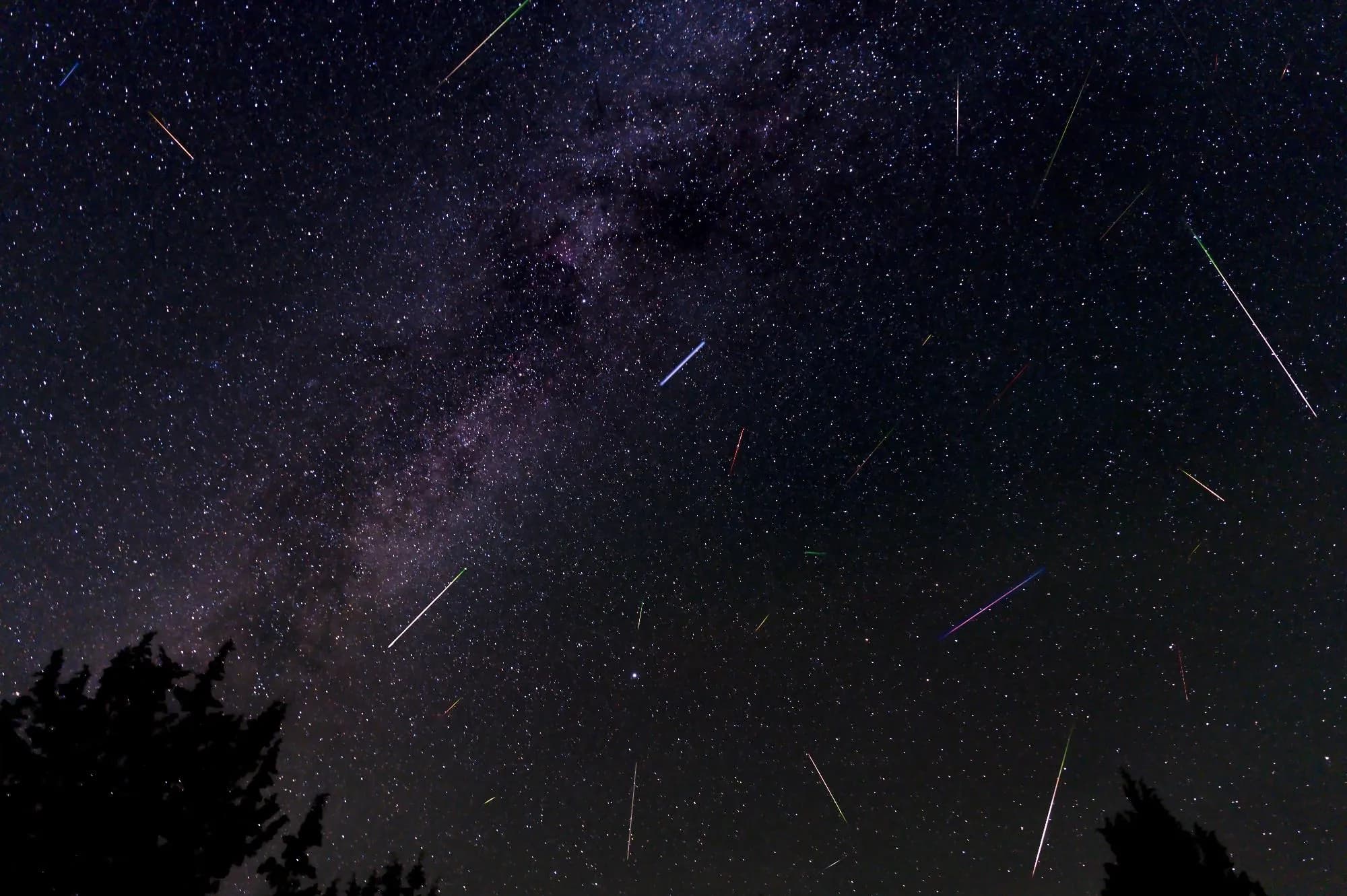
Having both spectacles on the same day —eclipse at sunset, meteor shower in the early morning— makes August 12 a hard date to beat. And doing it from a Starlight viewpoint in La Massana, with certified dark skies and no light pollution, is the perfect combination.
The Perseids peak is concentrated between 4:00 and 6:00 AM on August 13 (peninsular time). To make the most of the night, it's ideal to arrive at the viewpoint before 11:00 PM, let your eyes adapt to the darkness, and wait for the peak activity between midnight and dawn.
Comapedrosa Astronomical Festival
The Andorra Comapedrosa Astronomy Festival is the Principality's benchmark astronomical event. In its June 2026 edition —already the fourth of the festival, with an expanded three-night format— it gathered almost 600 participants in La Massana, with a moonless sky that guaranteed extraordinary visibility.
The highlight of the 2026 edition was the Arinsal lights-out event on Saturday at 11:00 PM, with the collaboration of local establishments and residents. The result was a sky of exceptional quality for observing the Milky Way and deep-sky objects with automated telescopes.
The festival combines lectures, workshops for families, telescope observation sessions, night routes, and gastronomic experiences with themed menus in local restaurants. It's a way to fully immerse yourself in Andorran astrotourism without needing your own equipment or prior experience.
June is the astronomical month par excellence in Andorra. If you can plan your visit for those dates, the festival is the perfect excuse to combine mountains, culture, and dark skies.
Activities organized by season
La Massana's astronomical offerings are available almost all year round, albeit in different formats:
Summer (July-August): guided observation sessions at Coll de la Botella, Tuesdays and Saturdays, organized by the Comú de La Massana with Starlight Monitors. Approximately three hours long. No equipment needed; just warm clothing and appropriate footwear.
Late Summer (September): outings with telescopes at Roc de la Sabina. Limited capacity and prior registration required. Free in some editions.
Autumn: longer nights and very clear skies after weather changes. Less organized activity, but excellent natural conditions for independent observers.
Winter (December-March): night snowshoe excursions from Coll de la Botella, Fridays, Saturdays, and holidays. A completely different experience: silence, snow, and the winter sky, which offers different constellations than summer.
How to get to each viewpoint: practical access guide
Coll de la Botella
From Andorra la Vella, take the CG-5 towards La Massana. Passing through La Massana, continue on road CS-520 towards Pal. Coll de la Botella is at the highest point of this road, before the turn-off to Arinsal. There is ample, signposted parking.
Approximate time from Andorra la Vella: 25-30 minutes.
Time from La Massana: 15 minutes.
Roc de la Sabina
From La Massana, take road CS-520 towards Arinsal. The Roc de la Sabina Viewpoint is signposted on the road, before reaching the village of Arinsal. Parking is available next to the viewpoint.
Time from La Massana: 10-12 minutes.
Comapedrosa Natural Park
The main entrance to Comapedrosa Natural Park is accessed from Arinsal. From the Pal Arinsal mountain resort car park, there are marked trails leading into the park and to the Refugi del Comapedrosa. For night access, prior planning or participation in an organized activity is recommended.
Tristaina Solar Viewpoint (Ordino Arcalís)
From Ordino, take road CG-3 towards the Ordino Arcalís station. At the base of the station, there are several free car parks. Access to the viewpoint is by cable car (available in summer, check schedules on the Ordino Arcalís website) or on foot via the corresponding hiking trail.
Once in Andorra, transport between destinations is easy with a rental car or using the available transfer options. To move between La Massana, Arinsal, and the rest of the country, check the options for transport in Andorra.
Astrotourism experiences available in Andorra
If you want to structure your visit around an organized activity, on Andorra.com you will find options for all profiles.
One of the most unique proposals in the catalog is the night observation with tasting at the Bordes de Cardemeller: an experience that combines the starry sky of La Massana with a tasting of local products in a setting of traditional Andorran bordes. It's the perfect format for those who want more than just looking up.
Beyond astrotourism, if your visit includes other plans for things to do in Andorra, the platform has the complete catalog organized by activity type and parish.
Where to stay near the Starlight viewpoints
Astronomical logic dictates a simple rule: the closer you are to the viewpoints at night, the better. Leaving at 11:00 PM from your accommodation in La Massana or Arinsal is very different from having to drive 40 minutes from Andorra la Vella.
La Massana, Pal, and Arinsal are the most recommended options for an astrotourism getaway. They are less than 15 minutes from the two main viewpoints and allow you to easily combine night observation with mountain activities during the day.
Check the availability of hotels in Andorra to find the best option according to your dates, budget, and preferences. You'll find everything from hotels with spas in Arinsal to mountain apartments in Pal, as well as more boutique options in La Massana.
If your plan is a more immersive nature experience and you don't mind the mountain logistics, you can also explore the option of high mountain camping in Andorra: spending the night under the dark sky of Comapedrosa is an experience few people consider, but very few forget.
For those who prefer to combine stargazing with other activities —shopping, gastronomy, thermal wellness— Andorra la Vella and Escaldes-Engordany are also valid bases, although they involve a commute to the viewpoints.
Common mistakes when planning a stargazing night in Andorra
Years of visiting the viewpoints in La Massana quickly teach you what goes wrong for first-time visitors. These are the most common mistakes:
Going on a full moon without knowing it. The lunar phase is the factor that most affects observation quality. With a full moon, the sky brightens and most faint stars disappear. Check the lunar calendar before booking. The best nights are new moon nights or early waxing/waning crescent.
Arriving at the viewpoint just when it's already dark. Eyes take at least 20 minutes to fully adapt to darkness. Arriving when the sky is already black means missing out on that progressive adaptation. Ideally, arrive 45-60 minutes before dark, set up your equipment, and wait.
Not bringing enough clothing. Coll de la Botella is over 2,000 meters high. Even in August, when the temperature in Andorra la Vella can be 22-23 degrees Celsius, it can be 8-10 degrees Celsius up here at midnight. People arrive in t-shirts and an hour later are freezing. Layers, windbreaker jacket, hat: non-negotiable.
Using your phone screen without control. Every time you turn on your screen at normal brightness, you destroy the night adaptation you took 20 minutes to achieve. Activate night mode (red tones), lower the brightness to minimum, and use it as little as possible.
Turning on car headlights. If there are other observers at the same spot, turning on headlights ruins everyone's experience in a matter of seconds. Turn off your lights, use only a headlamp with red light.
Planning a night route without knowing the terrain. Walking during the day and walking at night in the mountains are completely different. An easy daytime trail can become completely disorienting at night, even with a flashlight. If you want to do a night route in Andorra, go with a guide or use routes you know beforehand.
Not checking the weather forecast. The sky can be completely clear in the valley and covered at the viewpoint. In the mountains, cloudiness can appear in a matter of hours. Always check the forecast before going up.
Ready to book your stargazing getaway? Check out the accommodations available in Andorra on Andorra.com and plan a night you won't forget.
Frequently Asked Questions
You may be interested in